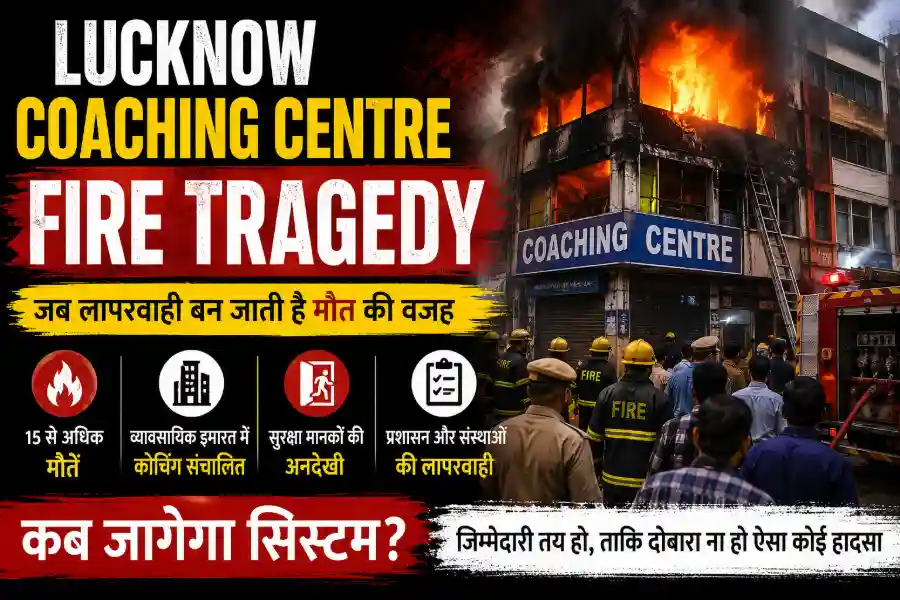
1. घटना से बड़ा सवाल: क्या पढ़ाई की जगहें सुरक्षित हैं?
एक student जब coaching, library या training institute जाता है, तो वह सिर्फ एक class attend करने नहीं जाता; वह अपने career और परिवार की उम्मीद लेकर जाता है. Parents fees, room rent, books और daily expenses इसलिए उठाते हैं क्योंकि उन्हें भरोसा होता है कि institute कम से कम basic safety जरूर देगा. Lucknow fire incident ने इसी भरोसे पर बड़ा सवाल रखा है.
Media reports के अनुसार Lucknow की एक commercial building में आग लगी जहां training/coaching activity और अन्य commercial units मौजूद थीं. Official investigation final cause और accountability बताएगी, इसलिए किसी individual पर premature blame लगाना सही नहीं है. लेकिन broader issue साफ है: high occupancy buildings में fire safety, emergency exit, wiring, ventilation और inspection को गंभीरता से लेना अब जरूरी है.
2. Coaching centres में risk क्यों बढ़ता है?
Coaching centres और private libraries में crowd density बहुत अधिक होती है. कई बार एक room में 40 से 100 तक students बैठते हैं. अगर staircase narrow है, exit route clear नहीं है, windows sealed हैं या emergency lights नहीं हैं, तो evacuation difficult हो सकता है. Fire accidents में flames से पहले smoke और panic बड़ा danger बन जाते हैं.
दूसरी समस्या mixed-use buildings की है. नीचे shops, clinic, food outlet या storage और ऊपर classroom; ऐसी building में अगर ground floor पर fault हो तो upper floors quickly affected हो सकते हैं. AC, computers, projectors, charging boards और lights का electrical load भी बढ़ता है. अगर wiring पुरानी या overloaded है, तो risk और बढ़ जाता है.
3. यह isolated incident नहीं, warning pattern है
Delhi Mukherjee Nagar coaching centre fire, Surat Takshashila fire और Rajkot gaming zone fire जैसी घटनाएं बताती हैं कि crowded public spaces में safety compliance को paperwork समझना कितना खतरनाक हो सकता है. हर हादसे के बाद inspections, notices और action की बातें होती हैं, लेकिन prevention system उतना मजबूत नहीं बन पाता जितना होना चाहिए.
असल समस्या reactive governance है. हादसे के बाद checking शुरू होती है; सवाल यह है कि हादसे से पहले unsafe buildings की पहचान क्यों नहीं होती? Fire NOC expiry, emergency exit blockage और illegal use जैसे issues automatic public monitoring में क्यों नहीं आते?
4. प्रशासन की जिम्मेदारी क्या होनी चाहिए?
Fire safety सिर्फ coaching owner का मामला नहीं है. Local administration, fire department, municipal body, electricity department और building authority की भी जिम्मेदारी होती है. High occupancy premises की periodic inspection, valid fire NOC, building use permission और electrical safety audit होना चाहिए.
Coaching hubs में quarterly safety audit होना चाहिए. Unsafe buildings की public list online available होनी चाहिए. जिस centre में emergency exit blocked हो, valid NOC न हो या capacity से ज्यादा students बैठाए जा रहे हों, वहां notice देकर छोड़ने के बजाय compliance तक operation रोकना चाहिए.
5. Coaching owners को क्या करना चाहिए?
Coaching business में marketing, AC classrooms, smart board और topper banners पर खूब खर्च होता है, लेकिन safety पर भी उतनी ही seriousness जरूरी है. Fire extinguisher service, emergency exit signage, staff training, crowd control और evacuation drill institute की basic duty है.
Responsible institute को parents को clearly बताना चाहिए कि fire NOC valid है या नहीं, emergency exit कहां है, batch capacity कितनी है और staff emergency में क्या करेगा. अगर institute इन basic questions से बचता है, तो students को alert होना चाहिए.
6. Students और parents की practical safety checklist
- Emergency exit: Classroom से बाहर निकलने का clear रास्ता देखें.
- Staircase: सीढ़ियां narrow, dark या सामान से blocked तो नहीं हैं.
- Fire extinguisher: Extinguisher visible है और service date updated है या नहीं.
- Batch strength: Room में जरूरत से ज्यादा students तो नहीं भरे गए.
- Basement/upper floor: Basement या crowded upper floor पर class हो तो extra caution रखें.
- Wiring: Open wires, overloaded extension board या unsafe AC wiring दिखे तो question करें.
- Documents: Fire NOC और building safety certificate पूछना आपका अधिकार है.
7. Safety culture कैसे बनेगा?
Safety culture तब बनेगा जब parents सवाल पूछेंगे, students aware होंगे, institutes transparency दिखाएंगे और administration regular audit करेगा. हर new batch को safety orientation मिलनी चाहिए. हर floor पर evacuation map लगना चाहिए. Staff को extinguisher use करना आना चाहिए. Fire drill सिर्फ schools में नहीं, coaching centres और libraries में भी होनी चाहिए.
Government exam aspirants already competition, syllabus, family expectations और financial pressure झेलते हैं. उन्हें यह डर नहीं होना चाहिए कि जिस room में वे पढ़ रहे हैं, emergency में बाहर निकलने का रास्ता मिलेगा या नहीं.
निष्कर्ष: पढ़ाई की जगह उम्मीद की जगह होनी चाहिए
Lucknow fire tragedy से सबसे बड़ा lesson यही है कि coaching centres, libraries और training institutes में fire safety optional नहीं हो सकती. हर student को अपने classroom का exit route पता होना चाहिए. हर parent को admission से पहले safety check करना चाहिए. हर coaching owner को student safety को priority बनाना चाहिए. और हर administration को inspection को paper formality नहीं, life-saving duty मानना चाहिए.
Career जरूरी है, लेकिन life उससे भी ज्यादा जरूरी है. किसी भी institute की popularity, discount या famous faculty से पहले यह देखना जरूरी है कि emergency में वहां से safely बाहर निकला जा सकता है या नहीं.
अक्सर पूछे जाने वाले प्रश्न (FAQs)
Students को admission से पहले क्या check करना चाहिए?
Emergency exit, fire extinguisher, batch strength, staircase, ventilation, wiring और fire NOC details जरूर check करें.
क्या fire NOC पूछना जरूरी है?
हाँ. यह life safety से जुड़ा basic question है और parents/students को यह पूछना चाहिए.
Coaching centres में fire risk क्यों होता है?
High occupancy, mixed-use building, electrical load, blocked exits और emergency training की कमी risk बढ़ाती है.
Discussion0
Join the Discussion
Login to your account to share comments, tips, and engage with other aspirants.