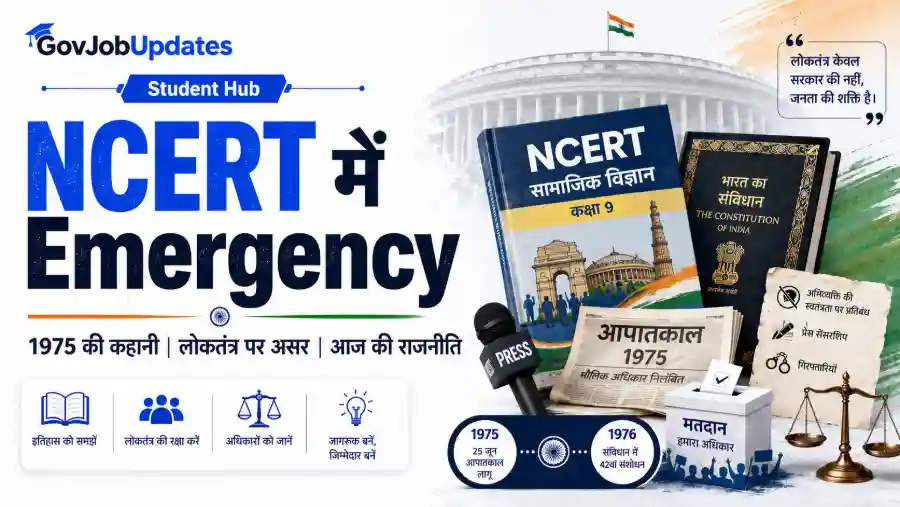
1. NCERT में Emergency topic क्यों चर्चा में है?
Reports के अनुसार NCERT ने Class 9 Social Science textbook में Emergency पर section जोड़ा है और इसे India की democracy के लिए एक major challenge के रूप में present किया है. यह इसलिए important है क्योंकि school level पर students पहली बार systematic तरीके से पढ़ेंगे कि democratic system में power, rights और institutions के बीच balance क्यों जरूरी होता है.
Emergency जैसा topic केवल history नहीं है. यह civics, constitution, media freedom, court, Parliament, elections और citizens के अधिकारों से जुड़ा हुआ topic है. इसलिए इसे पढ़ते समय students को किसी एक party के पक्ष या विपक्ष में खड़े होने से पहले यह समझना चाहिए कि लोकतंत्र में rules और institutions का purpose क्या होता है.
2. Quick Context: अभी क्या नया हुआ?
- Media reports के अनुसार NCERT ने Class IX textbook में Emergency को पहली बार dedicated section के रूप में शामिल किया है.
- Textbook में Emergency को Indian democracy के major challenge के रूप में बताया गया है.
- Education Minister की comments के बाद यह topic फिर national debate में आया.
- NCERT ने fake/pirated books को लेकर भी warning जारी की है, इसलिए students को authentic textbook ही use करनी चाहिए.
Student takeaway: यह topic board syllabus, school discussion, competitive exams और general awareness - चारों में useful हो सकता है.
3. Emergency का simple meaning क्या होता है?
Emergency का मतलब होता है ऐसी असाधारण स्थिति जिसमें government को सामान्य समय से ज्यादा extraordinary powers मिल जाती हैं. Constitution में Emergency provisions इसलिए रखे जाते हैं ताकि war, external aggression, armed rebellion या serious crisis जैसी conditions में state जल्दी decision ले सके.
लेकिन democratic system में Emergency dangerous भी हो सकती है, क्योंकि इसी period में नागरिक अधिकार, press freedom, political opposition और institutional checks कमजोर पड़ सकते हैं. इसलिए democratic countries में Emergency powers को हमेशा safeguards, court review, parliamentary approval और public accountability के साथ देखा जाता है.
India में Constitution के Part XVIII में Emergency provisions आते हैं. National Emergency Article 352 के तहत declared की जा सकती है. आज के समय में इसकी grounds war, external aggression और armed rebellion हैं. 1975 में Emergency “internal disturbance” के आधार पर लगी थी; बाद में 44th Constitutional Amendment के बाद इस phrase को “armed rebellion” से replace किया गया, ताकि power का misuse difficult हो.
4. India में 1975 वाली Emergency कब लगी?
India की सबसे चर्चित Emergency 25 June 1975 को declare हुई और 21 March 1977 तक चली. अक्सर लोग इसे “1976 की Emergency” भी बोल देते हैं क्योंकि 1976 इसका सबसे intense और निर्णायक year था, लेकिन technically Emergency June 1975 में लगी थी. 1976 में constitutional amendments, political control, censorship और governance changes का असर ज्यादा गहराई से दिखाई दिया.
उस समय Prime Minister Indira Gandhi थीं और President Fakhruddin Ali Ahmed ने Emergency proclamation जारी किया. Official reason “internal disturbance” बताया गया. Emergency declaration से पहले Allahabad High Court का एक judgment, opposition movement, JP movement, political instability और government-opposition conflict देश के political climate को बहुत tense बना चुके थे.
5. 1975-77 Emergency को समझने की neutral timeline
- 1974-75: Student movements, inflation, corruption allegations और JP movement की वजह से political pressure बढ़ा.
- 12 June 1975: Allahabad High Court ने Indira Gandhi के election को लेकर important judgment दिया.
- 25 June 1975: National Emergency घोषित हुई.
- 1975-76: Opposition leaders की arrests, press censorship और civil liberties restrictions चर्चा में आए.
- 1976: 42nd Constitutional Amendment और governance changes ने political system पर बड़ा असर डाला.
- 1977: Elections हुए, Emergency समाप्त हुई और सत्ता परिवर्तन हुआ.
6. Emergency के दौरान नागरिक अधिकारों पर क्या असर पड़ा?
Emergency का सबसे बड़ा असर civil liberties पर पड़ा. Reports और historical accounts में बताया जाता है कि कई opposition leaders और activists को preventive detention laws के तहत arrest किया गया. Press पर censorship लगाई गई, जिससे newspapers और journalists को government criticism publish करने में restrictions का सामना करना पड़ा.
Fundamental Rights democracy का heart माने जाते हैं. Emergency period में इन्हीं rights के suspension और restriction पर सबसे ज्यादा debate हुई. यही वजह है कि Emergency को students के लिए important case study माना जाता है: क्या elected government भी जब बहुत ज्यादा power hold करे तो citizens के rights कमजोर हो सकते हैं?
7. Press censorship और media freedom क्यों important issue बना?
Democracy में media को fourth pillar इसलिए कहा जाता है क्योंकि वह government decisions पर सवाल पूछता है, public information share करता है और accountability बनाता है. Emergency के दौरान press censorship ने इस role को बहुत limited कर दिया. कई newspapers को content publish करने से पहले approval या restrictions का सामना करना पड़ा.
आज के students के लिए यह lesson बहुत important है. Media freedom का मतलब सिर्फ journalists की freedom नहीं है; यह public के right to know से जुड़ा हुआ है. अगर citizens को accurate information नहीं मिलेगी, तो वे informed voting और informed debate कैसे करेंगे?
8. 1976 क्यों important year था?
Emergency June 1975 में लगी, लेकिन 1976 इसका सबसे impactful year माना जाता है. इसी period में governance और Constitution से जुड़े बड़े changes हुए. 42nd Constitutional Amendment 1976 को अक्सर “mini Constitution” भी कहा जाता है क्योंकि इसने Constitution के कई parts को प्रभावित किया. Preamble में “Socialist”, “Secular” और “Integrity” जैसे words भी इसी amendment के दौरान जोड़े गए.
1976 का importance इसलिए भी है क्योंकि उस time executive power, Parliament, judiciary और federal structure के balance पर बड़ा national debate बना. Students को यह समझना चाहिए कि Constitution सिर्फ legal document नहीं है; यह power को limit करने और citizen rights को protect करने वाला framework है.
9. Emergency से democracy को कौन-कौन से lessons मिले?
- Strong government और accountable government दोनों अलग चीजें हैं.
- National crisis के नाम पर rights को unlimited तरीके से restrict नहीं किया जा सकता.
- Opposition, media और courts democracy में unnecessary noise नहीं, बल्कि checks and balances हैं.
- Constitutional safeguards कमजोर हों तो elected power भी authoritarian हो सकती है.
- Public memory important है, क्योंकि democracy केवल voting से नहीं, जागरूक citizens से चलती है.
10. क्या Emergency को party politics की तरह पढ़ना चाहिए?
Emergency naturally political topic है क्योंकि यह एक elected government, opposition leaders, courts और Parliament से जुड़ा हुआ था. लेकिन students के लिए इसे केवल “Congress vs BJP” या “Indira Gandhi vs Opposition” की तरह पढ़ना अधूरा approach होगा. बेहतर होगा कि इसे democracy vs concentration of power के lens से पढ़ा जाए.
अगर कोई student सिर्फ current politics के angle से Emergency पढ़ेगा, तो वह उसके constitutional lessons miss कर सकता है. और अगर कोई student केवल historical dates याद करेगा, तो वह समझ नहीं पाएगा कि यह topic आज भी क्यों relevant है. Neutral approach यह है कि facts, legal framework, institutional impact और citizen rights को साथ में study किया जाए.
11. JP Movement और Opposition की भूमिका क्या थी?
Jayaprakash Narayan, जिन्हें अक्सर JP कहा जाता है, उस समय opposition और student movements की बड़ी आवाज बने. Corruption, governance issues और political accountability को लेकर उनके movement ने national level पर बड़ी चर्चा पैदा की. Emergency declaration के बाद JP सहित कई opposition leaders की arrests ने political debate को और intense बनाया.
JP movement को केवल anti-government movement के रूप में नहीं, बल्कि public accountability की demand के रूप में भी समझा जा सकता है. हालांकि हर movement की अपनी political complexities होती हैं, फिर भी इस episode ने दिखाया कि democracy में public protest और opposition politics का role कितना important होता है.
12. Courts और Constitution का सवाल
Emergency period में judiciary की भूमिका भी debate का बड़ा हिस्सा रही. जब fundamental rights suspend होते हैं और detention laws use होते हैं, तब courts की role बहुत critical हो जाती है. यही वह जगह है जहां democracy में rule of law की real test होती है.
Emergency के बाद भारत ने safeguards strengthen करने की कोशिश की. 44th Constitutional Amendment ने Emergency declaration और rights suspension से जुड़े कई provisions को अधिक restrictive बनाया. यह democracy की learning process थी: अगर system में loophole दिखे तो Constitution को सुधारकर future misuse को कम किया जाए.
13. NCERT में Emergency पढ़ना students के लिए क्यों जरूरी है?
Students के लिए Emergency पढ़ना इसलिए जरूरी है क्योंकि यह topic civics को real life से जोड़ता है. किताब में democracy, rights, constitution और election पढ़ना आसान है; लेकिन Emergency जैसी घटना दिखाती है कि जब institutions pressure में आते हैं तो democracy की असली परीक्षा कैसे होती है.
- Competitive exams में Polity और Modern History के लिए useful.
- School students के लिए democracy का practical case study.
- Citizenship education के लिए important.
- Media literacy और rights awareness बढ़ाने वाला topic.
- Current affairs और political debates को समझने में मददगार.
14. आज के political scenario में Emergency क्यों बार-बार चर्चा में आती है?
Emergency आज भी politics में इसलिए आती है क्योंकि political parties इसे लोकतंत्र, power misuse, rights और accountability के symbol के रूप में use करती हैं. Ruling parties इसे opposition को घेरने के लिए use कर सकती हैं, opposition इसे current government पर counter questions उठाने के लिए use कर सकता है. यह normal political process का हिस्सा है.
लेकिन एक जागरूक reader को यह समझना चाहिए कि Emergency का lesson किसी एक party तक limited नहीं है. यह हर सरकार, हर institution और हर citizen के लिए warning है कि power जितनी भी popular mandate से आए, उसे constitutional limits के अंदर ही रहना चाहिए.
आज के दौर में social media, digital surveillance, fake news, media pressure, protests, court cases और institutional independence पर debates लगातार होती रहती हैं. Emergency को पढ़ना इन debates को समझने का background देता है. इससे student यह पूछना सीखता है: क्या rights सुरक्षित हैं? क्या media स्वतंत्र है? क्या opposition को space मिल रहा है? क्या court effective check बना हुआ है? क्या citizens informed हैं?
15. Current politics को bias के बिना कैसे समझें?
Bias-free analysis का मतलब यह नहीं कि कोई moral judgement ही न किया जाए. Bias-free analysis का मतलब है कि facts, context और constitutional principles को पहले रखा जाए, और party loyalty को बाद में. Emergency को लेकर historical criticism strong है, लेकिन students को यह भी समझना चाहिए कि हर historical event को present politics के हथियार में बदल देना learning को कमजोर कर देता है.
आज जब कोई political leader Emergency की बात करे, तो student को तीन सवाल पूछने चाहिए: पहला, वह कौन सा fact बता रहा है? दूसरा, वह fact किस context में use कर रहा है? तीसरा, क्या same democratic principle current situation पर भी लागू किया जा रहा है? यही mature political understanding है.
16. Students के लिए exam-ready summary
- Emergency का general meaning: extraordinary crisis में government powers का expansion.
- Indian context: 25 June 1975 से 21 March 1977 तक National Emergency.
- Ground then: internal disturbance.
- Major issues: rights suspension, opposition arrests, press censorship, executive power.
- 1976 importance: 42nd Amendment और constitutional-political changes.
- Post-Emergency lesson: 44th Amendment ने safeguards strengthen किए.
- NCERT relevance: democracy, rights और constitutional checks को school level पर समझाना.
17. इस topic को पढ़ते समय किन गलतियों से बचें?
पहली गलती है इसे केवल political blame game बनाकर पढ़ना. दूसरी गलती है इसे सिर्फ dates और names तक सीमित कर देना. तीसरी गलती है social media clips के आधार पर opinion बना लेना. Emergency जैसे topic पर authentic textbooks, reliable news reports, Constitution और balanced analysis पढ़ना चाहिए.
Students को यह भी समझना चाहिए कि history हमेशा black-and-white नहीं होती, लेकिन कुछ principles clear होते हैं: citizens के rights, free press, fair elections, independent courts और accountable government किसी भी democracy की basic requirements हैं. Emergency का सबसे बड़ा lesson यही है कि democracy को केवल leaders नहीं, citizens भी protect करते हैं.
18. GovJobUpdates Student Hub पर ऐसे topics क्यों?
Government exam aspirants के लिए केवल vacancy, admit card और result जानना काफी नहीं है. SSC, UPPSC, UPSC, state PCS, TET और police exams में polity, modern history और current affairs बहुत important होते हैं. Emergency जैसा topic exam + awareness दोनों के लिए relevant है.
- Student Hub - current issues और exam-oriented explainers के लिए.
- Quiz Practice - GK/GS revision के लिए.
- Rank Predictor - exam score analysis के लिए.
Final Analysis: Emergency को याद रखना democracy की जरूरत है
NCERT में Emergency topic जुड़ना केवल textbook update नहीं है; यह students को democracy की real test case पढ़ाने का मौका है. Emergency बताती है कि Constitution में power भी है और safeguards भी. Government को crisis में power मिल सकती है, लेकिन citizens के rights और institutions को पूरी तरह कमजोर करना democracy के लिए खतरनाक हो सकता है.
1975-77 की Emergency को बिना bias पढ़ने का सबसे अच्छा तरीका है: facts जानिए, context समझिए, rights पर असर देखिए, institutions की भूमिका समझिए और फिर आज की politics में democratic values को apply कीजिए. किसी भी party की government हो, democracy तभी मजबूत रहेगी जब citizens सवाल पूछना, history पढ़ना और Constitution समझना नहीं छोड़ेंगे.
अक्सर पूछे जाने वाले प्रश्न (FAQs)
NCERT ने Emergency को किस class में जोड़ा है?
Media reports के अनुसार NCERT ने Class IX Social Science textbook में Emergency पर section शामिल किया है.
भारत में Emergency कब लगी थी?
सबसे चर्चित National Emergency 25 June 1975 को declare हुई और 21 March 1977 तक चली.
लोग 1976 Emergency क्यों कहते हैं?
Emergency 1975 में लगी थी, लेकिन 1976 इसका सबसे impactful year रहा. इसी year में कई constitutional और political developments हुए, इसलिए लोग 1976 को भी strongly associate करते हैं.
Emergency में press censorship क्यों important issue था?
क्योंकि free press democracy में government accountability और public information का बड़ा source है. Censorship से citizens का right to know प्रभावित होता है.
Students को Emergency कैसे याद रखनी चाहिए?
इसे केवल dates नहीं, बल्कि democracy, fundamental rights, media freedom, opposition space और constitutional safeguards के case study के रूप में पढ़ें.
Sources checked
Disclaimer
यह article educational awareness और exam-oriented understanding के लिए है. NCERT textbook content, syllabus details और official academic instructions के लिए NCERT की official website और authentic textbook को ही final मानें. Political analysis को neutral और constitutional perspective से पढ़ें.
Discussion 0
Join the Discussion
Login to your account to share comments, tips, and engage with other aspirants.