
Quick understanding
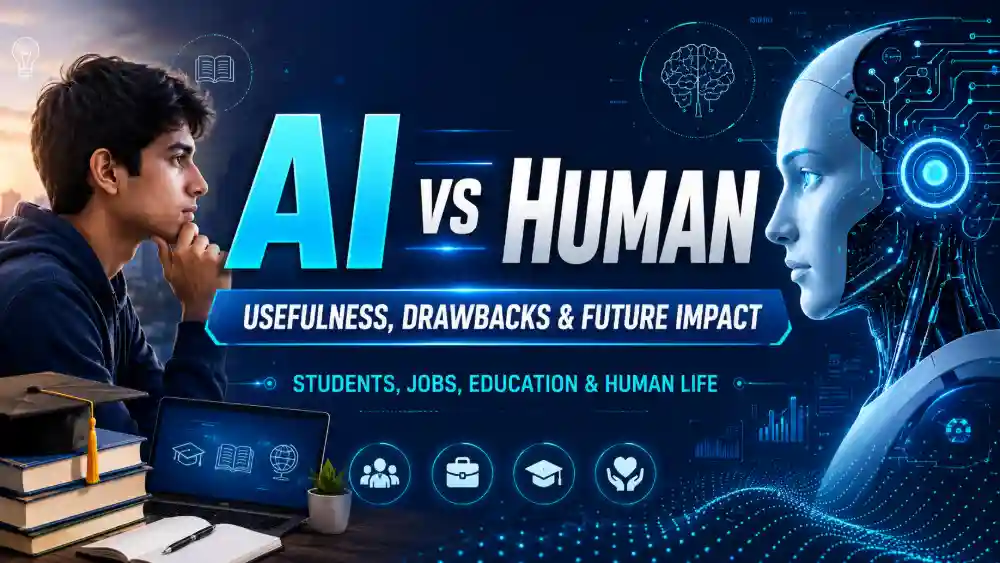
AI यानी Artificial Intelligence ऐसे computer systems और tools हैं जो data से pattern सीखकर answer, image, code, summary, prediction, translation, planning या automation जैसे tasks कर सकते हैं. Human intelligence experience, emotions, ethics, creativity, body, social understanding और responsibility से बनी होती है. AI powerful है, लेकिन perfect नहीं. Human slow हो सकता है, लेकिन meaning, empathy और judgement में unique है. Future AI vs Human का नहीं, बल्कि AI with Human का होगा.
1. Students AI vs Human topic kyu search karte hain?
आज students Google पर search करते हैं: “AI vs Human”, “AI ke fayde aur nuksan”, “AI students ke liye useful hai kya”, “AI jobs khatam karega kya”, “AI drawbacks”, “Artificial Intelligence kya hai”, “AI future skills” और “AI human life par impact”. यह search intent बताता है कि students सिर्फ definition नहीं चाहते; उन्हें practical answer चाहिए. क्या AI से पढ़ना सही है? क्या homework AI से बनाना cheating है? क्या AI future jobs ले लेगा? क्या coding, writing, teaching, designing और government jobs पर AI का असर पड़ेगा?
इस article का aim है कि AI को डर या hype की तरह नहीं, समझ की तरह पढ़ा जाए. AI न तो भगवान है और न दुश्मन. यह एक powerful tool है. जिस तरह calculator ने maths को खत्म नहीं किया बल्कि calculation आसान की, internet ने books को खत्म नहीं किया बल्कि information access बढ़ाया, उसी तरह AI human intelligence को replace करने की बजाय कई जगह augment कर सकता है. लेकिन बिना rules, ethics और verification के AI नुकसान भी कर सकता है.
2. AI kya hai simple language me?
AI यानी Artificial Intelligence computer systems की ऐसी ability है जिसमें वे data देखकर सीखते हैं और tasks perform करते हैं. Traditional software में programmer हर rule लिखता था. AI में system examples से pattern सीखता है. जैसे अगर AI को लाखों images दिखाए जाएं तो वह cats, cars, faces या documents पहचानना सीख सकता है. अगर AI को बहुत text दिया जाए तो वह language patterns सीखकर answer, summary, translation या essay draft बना सकता है.
AI के कई forms हैं. Machine learning data से prediction करता है. Deep learning images, speech और complex patterns में useful है. Generative AI text, image, music, video, code और ideas generate कर सकता है. Chatbots conversation करते हैं. Recommendation systems YouTube, Instagram, shopping और news feed में काम करते हैं. AI assistants writing, coding, planning और study support देते हैं. इसलिए AI एक single product नहीं, बल्कि technologies का पूरा family है.
3. Human intelligence kya hoti hai?
Human intelligence केवल memory या calculation नहीं है. Human intelligence में experience, emotions, social understanding, moral judgement, imagination, body language, empathy, common sense, curiosity और responsibility शामिल हैं. एक human teacher सिर्फ answer नहीं देता; वह student का fear समझता है. Doctor सिर्फ report नहीं पढ़ता; patient की condition, family pressure और treatment preference समझता है. Judge सिर्फ rule नहीं देखता; context और justice भी देखता है.
Humans गलतियां करते हैं, bias रखते हैं, थकते हैं और slow होते हैं. लेकिन humans meaning create करते हैं. वे सवाल पूछते हैं: “यह सही है या गलत?”, “इससे किसे नुकसान होगा?”, “क्या यह इंसान के लिए humane है?”, “क्या यह society को बेहतर बनाएगा?” AI इन questions का answer data pattern से दे सकता है, लेकिन final moral responsibility human की होती है. यही AI vs Human का core difference है.
4. AI vs Human: sabse bada difference
AI speed में strong है. यह seconds में हजारों pages summarize कर सकता है, large data analyse कर सकता है, multiple languages translate कर सकता है, code generate कर सकता है और routine tasks automate कर सकता है. Human speed में AI से compete नहीं कर सकता. लेकिन human context में strong है. AI कह सकता है कि answer statistically likely है, लेकिन human decide करता है कि answer socially acceptable, legally safe और morally right है या नहीं.
AI memory-like access में strong है, लेकिन lived experience नहीं रखता. AI medical symptoms explain कर सकता है, लेकिन pain feel नहीं करता. AI love poem लिख सकता है, लेकिन love live नहीं करता. AI essay बना सकता है, लेकिन exam hall का pressure नहीं समझता. AI teacher की तरह explain कर सकता है, लेकिन student की आंखों में confusion देखकर approach change करने की human ability अलग है. इसलिए AI को human का competitor नहीं, assistant समझना ज्यादा सही है.
5. AI kyu jaroori hai?
AI जरूरी इसलिए है क्योंकि दुनिया में data, tasks और complexity बहुत तेजी से बढ़ रही है. Hospitals में medical records, scans और reports बढ़ रहे हैं. Businesses में customers, payments और logistics बढ़ रहे हैं. Governments में citizen services, fraud detection और disaster management की जरूरत बढ़ रही है. Students के लिए syllabus, exams, sources और competition बढ़ रहे हैं. Human अकेला हर data process नहीं कर सकता. AI इस overload को manage करने में help करता है.
AI boring, repetitive और time-consuming tasks कम कर सकता है. जैसे summary बनाना, grammar सुधारना, language translate करना, code debugging, timetable बनाना, data sorting, customer support, document extraction, fraud alerts, traffic prediction, crop advisory, weather modelling और personalised learning. इससे humans higher-level thinking पर focus कर सकते हैं: strategy, creativity, empathy, leadership और problem-solving.
AI इसलिए भी जरूरी है क्योंकि global competition में countries और companies इसे use कर रही हैं. अगर students AI literacy नहीं सीखेंगे, तो वे future job market में पीछे रह सकते हैं. AI का मतलब केवल coding नहीं. एक teacher AI से lesson plan बना सकता है, एक farmer crop advisory समझ सकता है, एक shopkeeper inventory manage कर सकता है, एक student revision plan बना सकता है, और एक content creator research faster कर सकता है.
6. AI ki usefulness students ke liye
Students के लिए AI एक personal study assistant बन सकता है. अगर किसी topic की simple explanation चाहिए, AI उसे आसान भाषा में समझा सकता है. अगर English weak है, AI grammar सुधार सकता है. अगर answer writing practice करनी है, AI structure suggest कर सकता है. अगर current affairs notes चाहिए, AI headings और revision format बना सकता है. अगर coding सीखनी है, AI bugs explain कर सकता है. अगर timetable चाहिए, AI subject-wise plan बना सकता है.
लेकिन AI का best use “answer copy” नहीं, “understanding improve” है. Student AI से पूछ सकता है: इस concept को class 8 level पर समझाओ, इस paragraph का summary दो, इस answer में mistakes बताओ, इस topic से 10 MCQ बनाओ, इस essay का balanced conclusion लिखो, इस English sentence को improve करो. ऐसे prompts AI को tutor बनाते हैं. अगर student सिर्फ AI से assignment बनाकर submit करेगा तो learning नहीं होगी.
Competitive exam students के लिए AI helpful है, लेकिन official sources की जगह नहीं ले सकता. AI form dates, vacancy details, admit card, answer key या result पर गलती कर सकता है. इसलिए ऐसी चीजों के लिए official notification check करें. AI से explanation, revision, planning और practice लें; final facts official source से verify करें.
7. AI ki usefulness common life me
AI daily life में already मौजूद है. YouTube recommendations, Google search ranking, maps traffic, online shopping suggestions, spam filters, face unlock, translation apps, voice assistants, banking fraud alerts, customer support chatbots — ये सब AI या AI-like systems use करते हैं. Many people AI use कर रहे हैं, बस उन्हें पता नहीं.
Health में AI scans analyse करने, disease risk detect करने, drug discovery और patient management में help कर सकता है. Agriculture में weather, soil और crop advisory में मदद मिल सकती है. Business में inventory, marketing, customer behaviour और automation में AI useful है. Governance में service delivery, language translation, grievance classification, disaster alerts और fraud detection में AI support दे सकता है. Creative fields में AI idea generation, editing, design drafts और music/video support दे सकता है.
Common people के लिए AI तब useful है जब यह time बचाए, access बढ़ाए और decision support दे. लेकिन decision human को ही लेना चाहिए. AI से advice लो, लेकिन blind trust मत करो. Especially health, finance, legal और career decisions में expert consultation जरूरी है.
8. AI ke drawbacks: sabse important risks
AI के drawbacks को समझना उतना ही जरूरी है जितना benefits समझना. पहला drawback है hallucination. AI confidently गलत answer दे सकता है. वह fake source, wrong date, imaginary case या incomplete explanation दे सकता है. Student अगर verify नहीं करेगा तो गलत notes बना सकता है. दूसरा drawback bias है. AI जिस data पर trained है, उसमें society के biases हो सकते हैं. इससे gender, caste, race, language या region-based unfair outputs आ सकते हैं.
तीसरा drawback privacy है. लोग AI tools में personal data, documents, photos, medical reports, passwords या confidential information डाल देते हैं. यह risky है. Fourth drawback overdependence है. अगर student हर answer AI से बनवाएगा तो thinking skill कमजोर हो सकती है. Fifth drawback job displacement है. Repetitive writing, basic coding, customer support, data entry, translation और routine analysis जैसे tasks automate हो सकते हैं. Sixth drawback misinformation है. AI-generated fake images, deepfakes, fake news और copied content social trust damage कर सकते हैं.
Seventh drawback inequality है. जिनके पास better AI tools, paid access, English prompts और digital skills होंगे, वे आगे निकल सकते हैं. Poor students फिर पीछे रह सकते हैं अगर digital literacy और access नहीं मिला. इसलिए AI revolution inclusive होना चाहिए.
9. AI aur jobs: kya sach me naukriyan khatam ho jayengi?
AI jobs को पूरी तरह खत्म करेगा या बदलेगा — यह debate complex है. कुछ repetitive और entry-level tasks automate होंगे. Basic content writing, simple data analysis, routine customer support, basic coding snippets, report drafting और document processing में AI already useful है. इससे कुछ job roles shrink हो सकते हैं. लेकिन नए roles भी बनेंगे: AI trainer, prompt specialist, data analyst, AI auditor, cybersecurity expert, automation manager, AI ethics officer, content verifier, human-AI workflow designer.
World Economic Forum की Future of Jobs style reports में repeatedly यह idea आता है कि digital access, AI, big data, cybersecurity और technological literacy future skills में important होंगे. Stanford AI Index जैसे reports भी दिखाते हैं कि AI adoption society, economy, science और governance तक फैल रही है. इसका मतलब students को AI से डरना नहीं, AI literacy सीखनी है. Future में “AI knows more than you” से ज्यादा important होगा “Can you use AI better than others?”
Jobs का future human + AI combination में है. Doctor AI scan report से help लेगा, लेकिन patient counselling human करेगा. Lawyer AI research से help लेगा, लेकिन court strategy human बनाएगा. Teacher AI lesson plan बना सकता है, लेकिन student motivation human देगा. Government officer AI dashboard देख सकता है, लेकिन public accountability human रहेगी. इसलिए human skills खत्म नहीं होंगी; उनका level upgrade होगा.
10. AI education ko kaise badlega?
Education में AI personalised learning ला सकता है. हर student की speed अलग होती है. कुछ students maths में strong होते हैं, English में weak. कुछ को videos अच्छे लगते हैं, कुछ को notes. AI student performance देखकर custom revision plan बना सकता है. It can generate practice questions, explain mistakes, translate difficult language and create summaries. इससे teacher का workload कम हो सकता है और student को immediate support मिल सकता है.
लेकिन education में AI misuse भी हो सकता है. Students homework AI से copy कर सकते हैं. Teachers AI-generated assignments detect करने में time waste कर सकते हैं. Schools अगर केवल surveillance tools लगाएं तो privacy issue हो सकता है. AI assessment unfair हो सकता है अगर system biased हो. UNESCO जैसे bodies AI in education में human oversight, privacy, equity और teacher role को important मानते हैं. Education का goal केवल fast answer नहीं, thinking और character building भी है.
Best education model यह होगा: AI routine support दे, teacher emotional और conceptual guidance दे, student active practice करे, और institution ethics rules बनाए. AI classroom assistant हो सकता है, classroom का मालिक नहीं.
11. Human skills jo AI replace nahi kar sakta
AI बहुत कुछ कर सकता है, लेकिन कुछ human skills अभी भी unique हैं. Empathy — किसी दुखी इंसान को समझना. Moral courage — सही के लिए खड़ा होना. Real-world responsibility — गलती का जवाब देना. Leadership — लोगों को inspire करना. Trust — long-term relationships बनाना. Cultural understanding — local context और values समझना. Creativity — सिर्फ content बनाना नहीं, meaningful originality लाना. Physical presence — doctor, nurse, athlete, soldier, artisan, farmer, performer जैसी roles में body और environment का role होता है.
Students को future के लिए इन skills पर काम करना चाहिए: critical thinking, communication, emotional intelligence, ethical reasoning, collaboration, adaptability, domain knowledge, writing, public speaking, digital literacy और problem-solving. AI tools के साथ ये skills multiply हो जाती हैं. बिना इन skills के AI सिर्फ shortcut बन जाएगा.
12. AI aur creativity: kya art aur writing khatam ho jayegi?
AI अब poems, stories, images, songs, scripts और designs बना सकता है. इससे creative fields में anxiety बढ़ी है. लेकिन creativity केवल output नहीं है; creativity intention, taste, emotion, experience और audience connection भी है. AI design draft बना सकता है, लेकिन brand की soul human decide करेगा. AI song बना सकता है, लेकिन real singer की life story और stage energy अलग होती है. AI article draft कर सकता है, लेकिन ground experience, honesty और voice human देते हैं.
Creative professionals को AI से लड़ने की जगह AI को assistant बनाना चाहिए. Writer AI से outline ले सकता है, लेकिन final voice खुद दे. Designer AI से concept generate कर सकता है, लेकिन final judgement खुद करे. Teacher AI से quiz बना सकता है, लेकिन student needs समझकर modify करे. Creativity का future human taste + AI speed में है.
13. AI ethics: kya allowed hai aur kya galat?
AI ethics का simple rule है: AI का use truth, fairness और responsibility के साथ करो. अगर student AI से explanation लेता है, ठीक है. अगर वह AI से पूरा assignment बनाकर अपना नाम लगाता है, गलत हो सकता है. अगर journalist AI से research organize करता है, ठीक है. अगर वह fake news publish करता है, गलत है. अगर doctor AI से support लेता है, ठीक है. अगर बिना verification patient को treatment दे देता है, risky है.
Ethical AI use में ये बातें जरूरी हैं: privacy protect करें, sensitive data upload न करें, AI output verify करें, source check करें, bias समझें, AI-generated content को blindly truth न मानें, और जहां required हो disclosure करें. Government, schools और companies को भी rules बनाने होंगे ताकि AI का benefit मिले लेकिन harm कम हो.
14. AI aur human life par impact
AI human life को convenience और complexity दोनों देगा. Convenience इसलिए क्योंकि tasks faster होंगे. Translation आसान होगी, visually impaired people को support मिलेगा, elderly care में smart systems मदद करेंगे, healthcare diagnosis fast हो सकता है, transport safer हो सकता है, education personalised हो सकती है. Complexity इसलिए क्योंकि privacy risk, job uncertainty, misinformation, loneliness और dependency बढ़ सकती है.
AI relationships पर भी असर डालेगा. लोग AI chatbots से बात करेंगे, emotional support लेंगे, career advice लेंगे. यह helpful हो सकता है, लेकिन human relationships का replacement नहीं होना चाहिए. इंसान को इंसान की जरूरत रहती है. AI सुन सकता है, लेकिन इंसान की तरह रिश्ते की जिम्मेदारी नहीं लेता. इसलिए mental health और social life में AI support tool है, substitute नहीं.
Human life पर सबसे बड़ा impact thinking habits में होगा. अगर लोग हर decision AI से पूछेंगे, तो independent judgement कमजोर हो सकती है. अगर लोग AI से सीखकर better questions पूछेंगे, तो intelligence बढ़ सकती है. इसलिए AI हमें smarter भी बना सकता है और lazy भी — result हमारी usage habit पर depend करेगा.
15. Students ke liye AI use karne ka safe formula
Students के लिए safe formula है: Learn, Verify, Practice, Create. Learn — AI से topic समझो. Verify — facts official sources से check करो. Practice — खुद questions solve करो. Create — final answer अपनी भाषा में लिखो. अगर ये चार steps follow करते हो तो AI तुम्हारे लिए वरदान है. अगर केवल copy-paste करते हो तो AI तुम्हारे learning system को damage करेगा.
AI से ये prompts useful हो सकते हैं: “Is topic ko beginner level par samjhao”, “Mujhe 10 MCQ do with answers”, “Mere answer ko improve karo but answer mujhe samjhao”, “Is paragraph ka summary banao”, “Mujhe 7-day revision plan do”, “Is topic ke pros and cons do”, “Mujhe official facts verify karne ke liye checklist do”. ये prompts student को active learner बनाते हैं.
AI से ये काम avoid करें: fake certificate बनाना, exam cheating, personal data upload करना, official answer key assume करना, health/legal/finance decisions blindly लेना, और controversial topics पर बिना source के content publish करना.
16. AI future me kya badlega?
Future में AI और powerful होगा. Multimodal AI text, image, audio, video और live environment समझेगा. AI agents tasks execute करेंगे: email draft, booking, research, coding, report, dashboard, reminders. Robotics के साथ AI factories, hospitals, agriculture और homes में आएगा. Education में AI tutor common हो सकता है. Government services में AI-assisted grievance redressal और document processing बढ़ सकती है.
लेकिन governance और regulation equally important होंगे. Stanford AI Index 2026 जैसे reports यह highlight करते हैं कि AI technology तेजी से बढ़ रही है, लेकिन governance, evaluation और preparedness उतनी fast नहीं चल पा रही. यही gap future का biggest challenge है. अगर society rules, transparency, safety, skills training और accountability पर काम करेगी तो AI benefit देगा. अगर नहीं, तो misinformation, inequality और job shock बढ़ सकते हैं.
17. Exam-ready points
- AI = machines/systems की ability to learn patterns and perform tasks like prediction, generation and automation.
- Human intelligence = creativity, empathy, ethics, experience, context and responsibility.
- AI strengths: speed, scale, pattern recognition, automation, language support, data analysis.
- AI weaknesses: hallucination, bias, privacy risk, overdependence, job disruption, misinformation.
- Students benefit: explanations, revision, MCQs, writing improvement, planning, coding support.
- Jobs future: routine tasks automate होंगे, लेकिन AI literacy + human skills demand बढ़ेगी.
- Ethics: verify facts, protect privacy, avoid cheating, maintain human oversight.
- Best future model: AI with Human, not AI vs Human.
18. Final analysis
AI vs Human की debate को war की तरह देखना गलत है. AI और human अलग strengths रखते हैं. AI speed, data और automation में powerful है. Human meaning, empathy, judgement और responsibility में powerful है. अगर हम AI को human replacement समझेंगे तो fear बढ़ेगा. अगर AI को responsible assistant समझेंगे तो productivity और learning बढ़ेगी.
Students के लिए AI future का compulsory skill है. जिस तरह computer literacy और internet literacy जरूरी हुई, वैसे ही AI literacy भी जरूरी होगी. लेकिन AI literacy का मतलब केवल prompt लिखना नहीं; इसका मतलब है सही सवाल पूछना, output verify करना, ethics समझना, privacy protect करना और final decision खुद लेना. जो student AI के साथ critical thinking रखेगा, वह future में आगे रहेगा.
Common people के लिए भी message clear है: AI से डरना नहीं, लेकिन अंधा भरोसा भी नहीं. AI को अपने काम, learning और life को better बनाने के लिए use करें. Human values — honesty, empathy, discipline, creativity और responsibility — को AI से ऊपर रखें. Technology बदलती रहेगी, लेकिन अच्छे इंसान और अच्छे decision की जरूरत हमेशा रहेगी.
अक्सर पूछे जाने वाले प्रश्न (FAQs)
AI vs Human me kaun better hai?
AI और human अलग कामों में better हैं. AI speed और data processing में better है; human empathy, ethics, creativity और real-life judgement में better है.
AI students ke liye good hai ya bad?
AI good है अगर उसे learning, revision और practice के लिए use किया जाए. Bad तब है जब student blindly copy करे या thinking बंद कर दे.
Kya AI jobs le lega?
AI कुछ repetitive tasks automate करेगा, लेकिन नए roles और skills भी create करेगा. Future में human + AI skills important होंगे.
AI ka sabse bada drawback kya hai?
Hallucination, bias, privacy risk, misinformation और overdependence AI के बड़े drawbacks हैं.
AI ka safe use kaise karein?
Personal data upload न करें, output verify करें, official facts check करें, AI को assistant रखें और final judgement खुद करें.
Sources checked
Disclaimer
यह article educational awareness के लिए है. AI tools rapidly change होते हैं. Jobs, exams, law, health, finance या personal decisions के लिए official sources और qualified experts की advice जरूर लें.
Discussion 0
Join the Discussion
Login to your account to share comments, tips, and engage with other aspirants.