
Important Note: यह article balanced consumer analysis है
Ethanol blending को पूरी तरह गलत या पूरी तरह perfect बताना दोनों extremes हैं. भारत जैसे oil-import dependent देश के लिए alternate fuels जरूरी हैं. लेकिन policy rollout में consumer choice, transparent testing, older vehicles की compatibility, warranty, mileage, pricing और food-water concerns पर सवाल पूछना भी जरूरी है.
1. Ethanol blending क्या होती है?
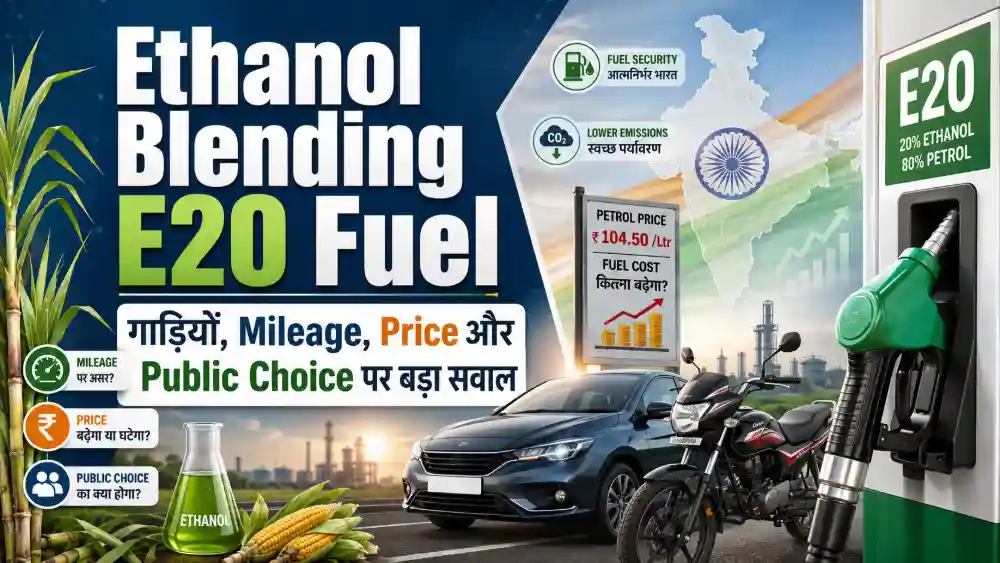
Ethanol एक alcohol-based fuel है जिसे sugarcane molasses, sugar syrup, maize, damaged grains, rice और biomass sources से बनाया जा सकता है. जब petrol में ethanol मिलाया जाता है तो उसे ethanol-blended petrol कहा जाता है. E10 का मतलब 10% ethanol और 90% petrol, E20 का मतलब 20% ethanol और 80% petrol, E85 का मतलब 85% ethanol और 15% petrol.
India ने पहले E5 और E10 की तरफ move किया, फिर E20 target को तेज किया. Government का argument है कि ethanol blending से petroleum imports कम होंगे, carbon emissions घटेंगे, farmers को extra market मिलेगा और rural economy को push मिलेगा.
2. E20 petrol पर controversy क्यों है?
Controversy इसलिए है क्योंकि policy का असर सीधे आम लोगों की जेब और गाड़ी पर पड़ता है. Petrol pump पर E20 उपलब्ध है, लेकिन बहुत से vehicle owners के पास यह clear choice नहीं है कि वे E0/E10/E20 में से कौन सा fuel लेना चाहते हैं.
Government कहती है कि concerns misleading हैं और E20 safe है. दूसरी तरफ motorists, auto experts और कुछ industry comments कहते हैं कि older vehicles में mileage reduction, rubber parts, seals, gaskets, warranty confusion और long-term durability को लेकर doubts हैं.
3. Quick facts
- E20 में 20% ethanol और 80% petrol होता है.
- Government ने E20 rollout को clean fuel और import reduction policy बताया है.
- Older vehicles पर mileage reduction 2-6% तक बताने वाली reports हैं.
- Government ने insurance/warranty fear को misleading बताया है.
- Consumer सवाल: ethanol blending benefit pump price में क्यों नहीं दिखा?
- Food vs fuel और water use debate भी important है.
4. क्या E20 से गाड़ियों का mileage कम होता है?
Ethanol का energy content petrol से कम होता है. इसलिए fuel economy पर impact का सवाल genuine है. Government generally कहती है कि mileage impact minimal है और modern E20-compliant vehicles में issue नहीं होना चाहिए. लेकिन policy debates और reports में older vehicles में 2% से 6% तक mileage reduction की बात सामने आई है.
Actual impact एक जैसा नहीं होगा. Vehicle नया है या पुराना, engine E20 compatible है या नहीं, maintenance कैसी है, tyre pressure, driving habit और traffic condition कैसी है, सब mileage को influence करते हैं.
5. Older vehicles का क्या होगा?
भारत में करोड़ों दोपहिया और चारपहिया vehicles ऐसे हैं जो E20 era से पहले बने थे. बहुत से owners को यह clear नहीं है कि उनकी vehicle E20 compatible है या नहीं. India का vehicle fleet बहुत mixed है: old scooters, commuter bikes, older petrol cars, carburettor vehicles, BS-IV vehicles, BS-VI vehicles और latest E20-compliant models.
Ethanol hygroscopic होता है, यानी moisture absorb कर सकता है. Higher blend कुछ rubber parts, seals, gaskets और fuel lines पर long-term impact डाल सकता है, especially अगर material ethanol-compatible नहीं है. Government का stand है कि older vehicles में कुछ rubber parts replacement simple हो सकता है. लेकिन consumer पूछता है: replacement cost कौन देगा?
6. Warranty और insurance confusion
Government ने insurance और warranty को लेकर concerns को misleading बताया है. लेकिन consumer confusion पूरी तरह खत्म नहीं हुआ. अगर कोई vehicle E20 compatible नहीं है और higher ethanol blend से component failure होता है, तो owner किससे claim करेगा — manufacturer, oil company या government?
Policy rollout में clear manufacturer-wise advisory होनी चाहिए: कौन से model-year E20 ready हैं, कौन से vehicles में preventive replacement जरूरी है, क्या cost estimate है, और warranty stance क्या है.
7. क्या public communication और testing पर्याप्त थी?
यह कहना कि कोई testing हुई ही नहीं, accurate नहीं होगा. Government और industry E20 tests और compatibility arguments का reference देते हैं. लेकिन public criticism का core point यह है कि क्या testing इतनी transparent, large-scale, India-specific और old-vehicle-inclusive थी कि आम consumer confident हो सके?
India में extreme heat, dust, traffic jams, irregular servicing, mixed-quality spare parts, long vehicle life, resale market और rural storage जैसी conditions हैं. इसलिए सिर्फ new vehicles के basis पर public trust build करना मुश्किल है. बेहतर rollout में old fleet advisory, transition choice और retrofit support शामिल होना चाहिए था.
8. Petrol price blending के बाद भी कम क्यों नहीं हुआ?
यह सबसे बड़ा public सवाल है. अगर ethanol petrol से cheaper है, imports reduce करता है और government को foreign exchange बचाता है, तो pump price क्यों नहीं घटा? Retail petrol price crude oil cost, refining, transport, dealer commission, central excise, state VAT, rupee-dollar exchange, OMC pricing strategy और government revenue needs से बनता है.
India में fuel taxes government revenue का बड़ा source हैं. इसलिए crude oil सस्ता हो या ethanol blending बढ़े, consumer को direct benefit automatically pass-on नहीं होता. सरकार चाहे तो taxes adjust कर सकती है, OMC pricing formula बदल सकती है या ethanol benefit pass-on कर सकती है.
9. Ethanol blending से किसको फायदा?
Farmers: Sugarcane, maize और grain suppliers को additional demand मिल सकती है. Sugar mills: Ethanol program surplus sugar manage करने और liquidity सुधारने में मदद कर सकता है. Distilleries: Ethanol demand से distillery investment और rural industry को benefit मिलता है. Government: Crude import bill pressure कम करने और farmer support narrative बनाने में मदद मिलती है.
10. किसको नुकसान या risk?
Older vehicle owners: Mileage reduction, parts compatibility और warranty uncertainty का risk. Daily commuters: अगर mileage घटती है और price same रहता है, तो effective running cost बढ़ सकती है. Consumers: अगर ethanol benefit pump price में नहीं आता, तो consumer only policy cost महसूस करता है. Food consumers: अगर grains/food crops fuel के लिए divert होते हैं, तो food price debate उठ सकती है.
11. Food vs Fuel debate
अगर ethanol mainly molasses और waste material से बने तो controversy कम होती है. लेकिन जब maize, rice या sugarcane juice/syrup जैसे feedstocks बढ़ते हैं, तो question उठता है: क्या food crop fuel में जा रही है? क्या यह food prices और water use पर pressure डालेगा?
12. Environment benefit: कितना real, कितना debated?
Ethanol blending tailpipe emissions और fossil fuel dependence reduce करने में मदद कर सकता है. लेकिन full environmental picture में crop cultivation, fertilizer, water use, distillation energy, transport और land-use impact भी include करना चाहिए. Ethanol को miracle solution नहीं, transition fuel माना जाना चाहिए.
13. Policy rollout में क्या better हो सकता था?
सबसे पहली जरूरत थी clear model-wise advisory. हर company को list देनी चाहिए थी कि कौन सी vehicle E20 ready है, कौन सी vehicle में parts replacement recommended है और warranty stance क्या है.
दूसरा, fuel pumps पर transition period में E10/E20 choice मिलनी चाहिए थी. तीसरा, pump price transparency होनी चाहिए: petrol component cost, ethanol component cost, tax, dealer commission और final price का simple disclosure.
14. Students और exam aspirants के लिए exam-ready summary
- Ethanol blending = petrol में ethanol मिलाकर fossil fuel dependence कम करना.
- E20 = 20% ethanol + 80% petrol.
- Benefits: import bill reduction, farmer income, emissions reduction, rural industry.
- Concerns: mileage drop, old vehicles, warranty, food vs fuel, water use, price transparency.
- Governance issue: public communication, choice, testing transparency, consumer support.
15. Final Analysis: Green fuel transition में public trust सबसे जरूरी
E20 fuel India की energy transition कहानी का बड़ा chapter है. इससे farmers, ethanol producers, import bill और environment को benefit मिल सकता है. लेकिन अगर consumer को लगे कि उसकी गाड़ी की mileage कम हो रही है और price relief नहीं मिल रहा, तो policy के खिलाफ resistance बढ़ेगा.
Public trust तब बनेगा जब government कहे: ये data है, ये vehicle list है, ये fuel price breakup है, ये old vehicle support है, ये transition choice है, और ये independent test results हैं. GovJobUpdates का balanced view है: ethanol blending को reject करने की जरूरत नहीं, लेकिन उसे blind faith से accept भी नहीं करना चाहिए. सवाल पूछना public policy को बेहतर बनाता है.
अक्सर पूछे जाने वाले प्रश्न (FAQs)
E20 petrol kya hota hai?
E20 petrol में 20% ethanol और 80% petrol होता है.
Kya E20 se mileage kam hota hai?
Government impact को minimal बताती है, लेकिन older vehicles में 2-6% तक reduction की बात policy debates और reports में आई है.
Petrol price kam kyu nahi hua?
Fuel price में taxes, OMC pricing, rupee-dollar, transport, dealer margin और government revenue का बड़ा role होता है.
Kisko fayda hota hai?
Farmers, sugar mills, distilleries, ethanol producers, rural industry और oil import management को benefit हो सकता है.
Kisko risk hai?
Older vehicle owners, daily commuters और non-E20-compatible vehicle users के concerns valid हैं.
Sources checked
- Reuters: India proposes higher ethanol-blended fuels
- Reuters: India launches E85 fuel at lower price
- Times of India: E20 petrol mandatory sale from April 1
- Times of India: Government clarification on E20 claims
- Reuters: E20 safety and performance debate
- Reuters: Supreme Court challenge to E20 rollout dismissed
Disclaimer
यह article public awareness और current affairs analysis के लिए है. Vehicle compatibility, warranty और maintenance के लिए अपने vehicle manufacturer, authorized service centre और official government notifications को final मानें.
Discussion 0
Join the Discussion
Login to your account to share comments, tips, and engage with other aspirants.