
Quick understanding
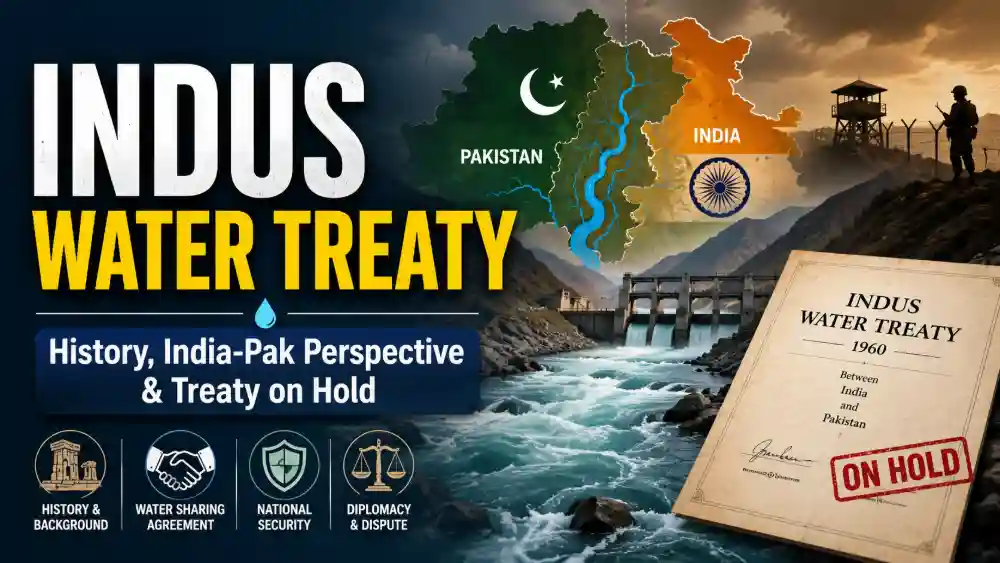
Indus Water Treaty 1960 में India और Pakistan के बीच sign हुई थी. इसका basic logic था कि Indus river system की six major rivers को practical तरीके से divide किया जाए ताकि Partition के बाद water conflict war में convert न हो. Eastern rivers — Ravi, Beas और Sutlej — India को मिलीं. Western rivers — Indus, Jhelum और Chenab — Pakistan के major use के लिए रखी गईं, लेकिन India को western rivers पर limited irrigation, hydropower और non-consumptive use की permission मिली. 2025 में Pahalgam terror attack के बाद India ने treaty को abeyance यानी on hold रखने का stand लिया, जिसके बाद यह topic फिर national security और international law की debate में आ गया.
1. Students is topic ko kyu search karte hain?
Indus Water Treaty ऐसा topic है जो UPSC, State PCS, SSC, defence exams, teaching exams, interview और group discussion तक में काम आता है. Students usually search करते हैं: “Indus Water Treaty kya hai”, “Sindhu Jal Sandhi kya hai”, “India Pakistan water dispute”, “Indus Water Treaty on hold”, “Operation Sindoor and Indus Treaty”, “water and terrorism angle” और “Pakistan water crisis”. यही search intent इस article का base है.
इस topic की importance इसलिए भी बढ़ती है क्योंकि यह सिर्फ geography नहीं है. इसमें history, international relations, river system, agriculture, treaty law, terrorism, diplomacy, military escalation, climate change और human security सब जुड़े हुए हैं. अगर कोई student सिर्फ इतना याद रखे कि eastern rivers India को और western rivers Pakistan को मिलीं, तो answer अधूरा रहेगा. Competitive exam answer में यह भी लिखना होगा कि treaty ने decades तक conflict management किया, लेकिन terrorism और trust deficit ने अब इसे political-security issue बना दिया है.
2. Indus river system ka basic geography
Indus river system South Asia का एक बहुत बड़ा river basin है. इसका water Himalaya, Karakoram और Tibetan plateau जैसे high mountain regions से आता है. Main Indus river Tibet/Ladakh side से निकलकर Pakistan की ओर जाती है और Arabian Sea में मिलती है. इसके साथ Jhelum, Chenab, Ravi, Beas और Sutlej जैसी rivers जुड़ती हैं. Partition से पहले यह पूरा irrigation network British India के Punjab-Sindh agriculture system का backbone था.
Problem तब आई जब 1947 में India और Pakistan अलग हुए. Headworks और control structures का बड़ा हिस्सा India side पर था, जबकि canals और agriculture command area का बड़ा हिस्सा Pakistan side पर चला गया. मतलब पानी के source और control एक country में, और पानी पर dependent खेत दूसरी country में. यही situation future conflict का कारण बन सकती थी. इसी problem को solve करने के लिए World Bank mediation में लंबे negotiation हुए और 1960 में Indus Water Treaty final हुई.
3. History: Partition ke baad water dispute kaise shuru hua?
1947 के Partition ने केवल land और population को divide नहीं किया, बल्कि rivers, canals और irrigation infrastructure को भी political border के बीच बांट दिया. Punjab का canal system British period में एक integrated irrigation network था. जब border बना तो कुछ headworks India में रह गए और canals Pakistan में चली गईं. Pakistan को डर था कि India upstream country होने के कारण पानी रोक सकता है. India का कहना था कि अपनी territory से गुजरने वाले water resources पर उसका भी legitimate right है.
1948 में water stoppage/dispute की situation ने दोनों countries को दिखा दिया कि पानी future war का reason बन सकता है. Temporary arrangements हुए, लेकिन long-term solution के बिना uncertainty बनी रही. इसी बीच World Bank ने mediation role लिया. Negotiations आसान नहीं थे. Pakistan historical usage और downstream dependence की बात करता था. India sovereign right और practical division की बात करता था. कई सालों की discussion, funding arrangements और engineering planning के बाद 19 September 1960 को Karachi में treaty sign हुई. India की तरफ से Jawaharlal Nehru, Pakistan की तरफ से President Ayub Khan और World Bank representative इस process में जुड़े.
4. Treaty ka main formula: rivers ka division
Indus Water Treaty का सबसे important point यह है कि इसने पानी को percentage-wise daily sharing की तरह नहीं बांटा, बल्कि rivers को divide किया. Eastern rivers — Ravi, Beas और Sutlej — India के use के लिए allocate की गईं. Western rivers — Indus, Jhelum और Chenab — Pakistan के major use के लिए allocate की गईं. इस arrangement में Pakistan को ज्यादा water volume मिला क्योंकि western rivers का flow eastern rivers की तुलना में काफी अधिक है.
लेकिन इसका मतलब यह नहीं कि India western rivers को बिल्कुल use नहीं कर सकता. Treaty India को western rivers पर कुछ limited rights देती है: run-of-the-river hydropower projects, navigation, fishery, domestic use और कुछ सीमित irrigation. इसी वजह से Baglihar, Kishanganga, Ratle जैसे hydropower projects पर disputes हुए, क्योंकि Pakistan को fear होता है कि India dam design के माध्यम से timing और flow पर influence बढ़ा सकता है, जबकि India कहता है कि उसके projects treaty-compliant हैं और water storage/consumption treaty limits के अंदर है.
5. Treaty ko successful kyu kaha jata tha?
Indus Water Treaty को लंबे समय तक world की successful water-sharing arrangements में गिना गया. Reason simple है: India और Pakistan के बीच 1965 war, 1971 war, Kargil conflict, terror attacks और diplomatic breakdowns हुए, लेकिन treaty formal रूप से चलती रही. Permanent Indus Commission meetings, technical objections, neutral expert mechanism और arbitration जैसे tools ने disputes को पूरी तरह खत्म नहीं किया, लेकिन उन्हें legal-diplomatic track पर रखा.
Students के लिए यह point important है कि treaty ने दोस्ती नहीं बनाई, लेकिन conflict management का framework दिया. South Asia में जहां trust low है, वहां भी पानी जैसे sensitive resource पर एक structure बना रहा. यही reason है कि कई scholars इसे “resilient treaty” कहते थे. लेकिन 2025 के बाद debate बदल गई: क्या कोई treaty tab bhi उसी तरह चल सकती है जब terrorism और national security concerns लगातार बढ़ रहे हों? यही India के current perspective का central question है.
6. Indian perspective: India ki main concerns kya hain?
India का perspective कई layers में समझना चाहिए. First, India upstream country है और उसके कई rivers Jammu & Kashmir, Ladakh, Himachal Pradesh और Punjab से होकर गुजरते हैं. India का argument रहा है कि treaty ने Pakistan को western rivers पर बहुत बड़ा advantage दिया, जबकि J&K region की hydropower और irrigation potential पर restrictions आईं. Indian side में यह feeling लंबे समय से रही है कि treaty generous थी, लेकिन Pakistan ने goodwill का reply cross-border terrorism से दिया.
Second, India की security concern है. India कहता है कि terrorism और normal cooperation साथ-साथ नहीं चल सकते. Uri attack के बाद भी “blood and water cannot flow together” phrase popular हुआ था. Pahalgam attack के बाद India ने treaty को abeyance/on hold रखने का decision लिया. Indian narrative यह है कि जब Pakistan भारत के citizens, tourists या security interests को target करने वाले cross-border terrorism पर credible action नहीं लेता, तो goodwill-based arrangements automatic नहीं चल सकते.
Third, India infrastructure angle भी उठाता है. India मानता है कि अपनी allocated eastern rivers का full use और western rivers पर treaty-permitted projects develop करना उसका right है. Shahpur Kandi, Ujh, Ratle, Kishanganga, Baglihar जैसे projects India के लिए water storage, power generation, flood management और regional development के point से important हैं. Indian argument यह भी है कि Pakistan अक्सर technical objections को diplomatic pressure tool की तरह use करता है, जिससे projects delay होते हैं.
7. Pakistan perspective: Pakistan ki main fears kya hain?
Pakistan का perspective भी समझना जरूरी है, क्योंकि exam answer neutral होना चाहिए. Pakistan Indus system को अपनी agriculture, drinking water, hydropower और food security की lifeline मानता है. Punjab और Sindh जैसे provinces बड़े पैमाने पर Indus basin irrigation पर depend करते हैं. Pakistan के लिए यह केवल treaty नहीं, survival issue है. इसलिए जब India treaty को hold पर रखता है या water flow/data sharing से जुड़ा कोई step लेता है, Pakistan इसे water weaponization के रूप में देखता है.
Pakistan का legal argument है कि Indus Water Treaty एक binding international treaty है और कोई भी party इसे unilateral तरीके से suspend या terminate नहीं कर सकती. Pakistan कहता है कि terrorism allegations और water-sharing obligations को अलग रखना चाहिए. उसका कहना है कि अगर upstream country water को pressure tool की तरह use करेगी, तो downstream population, farmers और civilians affected होंगे. Pakistan यह भी कहता है कि climate change, glacier melt और water scarcity के दौर में treaty को कमजोर करना region के लिए dangerous हो सकता है.
Pakistan की biggest concern timing और control है. Even अगर India के पास immediate massive storage capacity नहीं है, फिर भी upstream dam operations, data sharing, flood information और sudden flow changes downstream planning को affect कर सकते हैं. Pakistan agriculture planning, sowing season, canal regulation और flood warning system के लिए predictable flows चाहता है. इसलिए Pakistan इस issue को international forums और legal mechanisms तक ले जाने की बात करता रहा है.
8. Water and terrorism angle: debate ka asli core
Water and terrorism angle इस पूरे issue का सबसे sensitive part है. India का stance है कि Pakistan-sponsored या Pakistan-based terror infrastructure से भारत को लगातार security threat है. जब civilians पर attack हो, tourists मारे जाएं, soldiers target हों और terror ecosystem खत्म न हो, तब India के लिए normal diplomatic cooperation politically और morally difficult हो जाता है. इस logic में water treaty पर hold एक diplomatic pressure tool बन जाता है.
लेकिन इस debate का दूसरा side भी है. International law और humanitarian perspective से पानी को weapon बनाना dangerous precedent माना जाता है. Civilians, farmers और ordinary people terrorism policy के decision-maker नहीं होते. इसलिए critics कहते हैं कि water pressure से ordinary Pakistani citizens suffer कर सकते हैं, जबकि terror infrastructure पर direct effect uncertain है. यही tension इस topic को complicated बनाती है: क्या terror के खिलाफ pressure बनाना जरूरी है? हां. क्या water जैसा essential resource pressure tool होना चाहिए? यह international ethics और security policy की difficult debate है.
Student answer में balanced line लिखी जा सकती है: “India’s concern over cross-border terrorism is a legitimate national security concern, but water diplomacy must be handled carefully because river systems affect civilian life, agriculture, food security and regional stability.” इससे answer mature दिखेगा.
9. Pahalgam attack aur treaty on hold
April 2025 में Pahalgam terror attack के बाद India ने कई diplomatic steps लिए. उनमें Indus Water Treaty को abeyance/on hold रखना सबसे बड़ा symbolic और strategic step था. Abeyance का मतलब simple Hindi में यह है कि India ने treaty को normal implementation mode में continue करने से रोक दिया या pause position में रख दिया. इसका exact legal interpretation India और Pakistan अलग-अलग तरीके से करते हैं.
India का कहना है कि Pakistan ने goodwill और cooperation की spirit को damage किया है, इसलिए treaty का normal operation impossible है. Pakistan इसे illegal/unilateral step बताता है. यही reason है कि “treaty on hold” phrase current affairs में important हो गया है. Exam में यह पूछा जा सकता है कि abeyance और termination में difference क्या है. Termination का मतलब treaty को खत्म करना है, जबकि abeyance का मतलब उसके obligations/operation को pause या inactive mode में रखना हो सकता है. Practical impact depends करता है कि India कौन-कौन से operational steps लेता है: data sharing रोकना, commission meetings suspend करना, projects accelerate करना, storage use improve करना, आदि.
10. Operation Sindoor ka connection
Operation Sindoor India की military response framework का हिस्सा था, जो Pahalgam attack और cross-border terrorism context में discuss हुआ. Reports के अनुसार May 2025 में India ने Pakistan और Pakistan-administered areas में terror infrastructure पर precision strikes की बात कही. Pakistan ने civilian casualties और escalation की बात कही. दोनों sides की narratives अलग थीं, लेकिन overall result यह हुआ कि India-Pakistan relations फिर high tension zone में चले गए.
Indus Water Treaty और Operation Sindoor को एक साथ समझने का सही तरीका यह है कि दोनों same crisis chain के parts थे. एक side military response था, दूसरी side diplomatic-economic-water pressure. India ने signal दिया कि terrorism के बाद response केवल border पर नहीं होगा, बल्कि diplomacy, visas, trade, water, international outreach और security doctrine सबमें दिखेगा. Pakistan ने इसे escalation और coercive policy कहा. इसलिए Operation Sindoor article में water treaty को mention करना जरूरी है, और Indus Treaty article में Operation Sindoor को briefly explain करना भी जरूरी है.
11. Treaty on hold ka immediate impact kya hota hai?
Common misconception है कि India ने treaty hold की तो Pakistan का पानी अगले दिन बंद हो जाएगा. Reality इतनी simple नहीं है. Rivers natural flow पर चलती हैं. Massive water stopping के लिए बहुत large storage infrastructure, reservoirs और operational capacity चाहिए. India के पास western rivers पर unlimited storage rights नहीं थे, और existing infrastructure भी treaty limits के हिसाब से बना था. इसलिए immediate full stoppage practical नहीं होता.
लेकिन short-term और medium-term impacts फिर भी हो सकते हैं. India data sharing, project notifications, inspection mechanisms और commission meetings को slow या stop कर सकता है. India अपनी eastern rivers का full use बढ़ा सकता है. Western rivers पर treaty-permitted hydropower projects को तेज कर सकता है. Reservoir flushing, maintenance timing या operational decisions downstream anxiety बढ़ा सकते हैं. Pakistan को flood forecasting, irrigation planning और diplomatic predictability में uncertainty महसूस हो सकती है. इसलिए “water stop” headline oversimplified है; सही phrase है “water governance and treaty cooperation under stress”.
12. Kya India Pakistan ka pani rok sakta hai?
Technical answer: complete and permanent stoppage बहुत difficult है, especially western rivers पर. India upstream है, इसलिए कुछ operational influence रखता है, लेकिन western rivers के huge flows को रोकने के लिए बहुत बड़े dams और reservoirs चाहिए. Treaty restrictions, geography, cost, environmental clearance, local displacement, seismic risk और international pressure भी factors हैं. इसलिए “India kal se Pakistan ka pani band kar dega” जैसी social media बातें exaggerated होती हैं.
Strategic answer: India water infrastructure develop करके long-term leverage बढ़ा सकता है. Eastern rivers का पूरा उपयोग, canals, storage, hydropower, flood control और run-of-the-river projects India को अपने rights का better use करने में help कर सकते हैं. इसका मतलब पानी को instantly weapon बनाना नहीं, बल्कि treaty-permitted या post-abeyance policy space में national interest maximize करना है. Student answer में इसे “hydro-strategic leverage” कहा जा सकता है.
13. International law angle
International treaties generally good faith principle पर चलते हैं. Indus Water Treaty में dispute resolution mechanisms हैं: Permanent Indus Commission, Neutral Expert और Court of Arbitration type mechanisms. World Bank का role original mediation और certain procedural functions तक limited रहा है. World Bank normally दोनों countries के political dispute में judge की तरह direct interfere नहीं करता. यही वजह है कि जब India ने treaty को hold पर रखा तो World Bank की भूमिका को लेकर भी debate हुई.
Pakistan कहता है कि treaty unilateral रूप से suspend नहीं की जा सकती. India का argument national security और fundamental change in circumstances के around political रूप से रखा जाता है, लेकिन international legal debate complex है. Exam में safe answer यह होगा कि “Treaty abeyance raises questions of international law, good faith obligations, state responsibility, national security exceptions and humanitarian concerns.” इससे answer neither propaganda लगता है न weak.
14. Kashmir aur Jammu region ka development angle
India में कई लोग कहते हैं कि Indus Water Treaty की वजह से Jammu & Kashmir region को अपने water resources का full economic benefit नहीं मिला. Hydropower potential delay हुआ, irrigation सीमित रही और project approvals में Pakistan objections के कारण delays हुए. J&K जैसे mountainous region के लिए hydropower revenue, local jobs और electricity stability बहुत important हो सकते हैं.
लेकिन environmental angle भी है. Himalayan rivers पर large projects landslide, sedimentation, glacial risk, biodiversity और displacement issues ला सकते हैं. इसलिए India के लिए challenge केवल Pakistan objection नहीं है; sustainable development भी है. Agar India fast-track hydropower projects करता है तो transparent environmental assessment, local consultation, disaster safety और seismic design equally important होंगे. National security के साथ ecological security को ignore नहीं किया जा सकता.
15. Climate change aur water scarcity angle
Indus basin climate change से भी प्रभावित है. Glaciers, snowmelt, monsoon variability, extreme rainfall और drought cycles river flows को unpredictable बना सकते हैं. Pakistan downstream country होने के कारण high vulnerability feel करता है. India upstream Himalayan regions में flash floods, glacial lake risks और infrastructure damage face करता है. यानी दोनों countries climate stress में हैं.
Future problem यह है कि treaty 1960 की engineering और political thinking पर based है. उस समय climate change, glacier retreat, groundwater depletion, urban water stress और population explosion आज जितना बड़ा मुद्दा नहीं थे. इसलिए कई experts कहते हैं कि treaty को update करना चाहिए. लेकिन trust deficit इतना ज्यादा है कि renegotiation भी risky हो सकता है. Pakistan डरता है कि review के नाम पर India water advantage बढ़ाएगा. India कहता है कि outdated treaty national interest और modern realities के हिसाब से revise होनी चाहिए.
16. India ke options kya ho sakte hain?
India के पास कई options हैं. पहला, eastern rivers का full utilization. Ravi, Beas और Sutlej पर India का right है, इसलिए इनका पानी Pakistan में जाने से पहले better canal, storage और irrigation systems के through use किया जा सकता है. दूसरा, western rivers पर treaty-permitted या policy-permitted hydropower projects को accelerate करना. तीसरा, data sharing और commission-level engagement को security conditions से link करना. चौथा, international diplomatic campaign के through terrorism-water link को explain करना.
लेकिन हर option के साथ risk है. Too aggressive water posture international criticism ला सकता है. Sudden flow manipulation humanitarian concern बन सकता है. Large dams local environment और displacement issue बना सकते हैं. इसलिए India को legal, technical और moral legitimacy maintain करते हुए काम करना होगा. Strong statecraft का मतलब केवल pressure नहीं, credible evidence, transparent policy और long-term infrastructure planning भी है.
17. Pakistan ke options kya ho sakte hain?
Pakistan international legal forums, World Bank-linked mechanisms, diplomatic outreach और global media narratives का use कर सकता है. वह water security को human security issue बनाकर international sympathy लेने की कोशिश करेगा. Pakistan domestic level पर irrigation efficiency, water storage, canal modernization, crop pattern reform और groundwater management भी कर सकता है. लेकिन practically Pakistan की water governance problems भी गंभीर हैं: canal losses, inefficient irrigation, political water distribution, groundwater depletion और climate vulnerability.
अगर Pakistan केवल India को blame करेगा और domestic reform ignore करेगा, तो long-term water crisis solve नहीं होगा. Similarly अगर India केवल pressure politics करेगा और sustainable water planning ignore करेगा, तो regional instability बढ़ेगी. दोनों countries को water efficiency, flood warning, climate adaptation और transparency पर काम करना चाहिए, लेकिन terrorism और trust deficit cooperation को extremely difficult बना देते हैं.
18. Media narrative aur social media myths
Social media पर Indus Water Treaty को लेकर बहुत simplified claims viral होते हैं: “India ne Pakistan ka pani band kar diya”, “Pakistan ab desert ban jayega”, “water war start ho gaya”, “treaty खत्म हो गई”. ऐसी headlines emotional हैं, लेकिन पूरी reality नहीं बतातीं. River systems complex होते हैं. Water flow, dam capacity, season, snowmelt, monsoon, reservoir operation, legal obligations और infrastructure सब matter करते हैं.
Students को ऐसे topics में verified sources और balanced wording use करनी चाहिए. कोई भी claim लिखने से पहले यह देखना चाहिए कि वह official statement है, media report है, analyst opinion है या social media rumour. Exam answer में sensational language avoid करें. “Water as a weapon” phrase तभी use करें जब आप Pakistan perspective या international relations debate explain कर रहे हों; उसे fact की तरह नहीं, concern/narrative की तरह लिखें.
19. Exam answer ka best structure
अगर exam में पूछा जाए “Discuss Indus Water Treaty in the context of India-Pakistan relations,” तो answer इस तरह बन सकता है. Introduction: 1960 treaty, World Bank mediation, eastern-western rivers division. Body part 1: treaty की success — wars के बावजूद survived, dispute resolution mechanism. Body part 2: India perspective — national security, terrorism, J&K development, outdated provisions. Body part 3: Pakistan perspective — downstream dependence, agriculture, treaty legality, water security. Body part 4: current crisis — Pahalgam attack, treaty on hold, Operation Sindoor context. Conclusion: terrorism must end, but water diplomacy must remain lawful, humane and climate-aware.
Essay में आप यह line लिख सकते हैं: “The Indus Water Treaty shows how water can be both a bridge of cooperation and a lever of strategic pressure.” यह line balanced है और examiner को लगेगा कि आपने topic को emotional नहीं, analytical तरीके से समझा है.
20. Quick facts for revision
- Indus Water Treaty sign: 1960, Karachi.
- Mediation: World Bank.
- Eastern rivers: Ravi, Beas, Sutlej — India.
- Western rivers: Indus, Jhelum, Chenab — Pakistan major use.
- India rights on western rivers: limited irrigation, hydropower/non-consumptive uses under rules.
- Important institutions: Permanent Indus Commission, Neutral Expert, Court of Arbitration mechanisms.
- Current issue: Pahalgam attack के बाद India ने treaty को abeyance/on hold रखा.
- Operation Sindoor: terrorism response context में India-Pakistan crisis का हिस्सा.
- India concern: terrorism, trust deficit, J&K development, full use of allocated waters.
- Pakistan concern: agriculture lifeline, water security, legality of unilateral suspension.
21. Final analysis
Indus Water Treaty को केवल India vs Pakistan shouting match की तरह देखना गलत होगा. यह treaty South Asia की सबसे important water diplomacy arrangements में से एक रही है. इसने decades तक एक dangerous resource conflict को manageable framework में रखा. लेकिन treaty की success इस assumption पर थी कि दोनों countries कम से कम minimum goodwill और communication maintain करेंगी. जब terrorism, military escalation और diplomatic breakdown repeated हो जाते हैं, तो treaty पर pressure natural है.
India का anger और security concern understandable है, especially जब civilians पर terror attacks होते हैं और Pakistan-based groups का issue बार-बार उठता है. Pakistan की water insecurity भी real है क्योंकि Indus basin उसकी agriculture और economy का backbone है. इसलिए mature policy वही होगी जो terrorism पर zero tolerance रखे, लेकिन water decisions को legally defensible, technically sound और humanitarian consequences को ध्यान में रखकर ले. Future में या तो treaty reform होगी, या लंबे time तक on-hold tension चलेगा, या दोनों countries किसी limited technical cooperation model पर लौटेंगी. Students के लिए सबसे important बात: इस topic को one-line nationalism या one-line peace slogan में मत पढ़ो. इसे history, geography, security, law और human impact के combination की तरह समझो.
अक्सर पूछे जाने वाले प्रश्न (FAQs)
Indus Water Treaty kya hai?
यह 1960 का India-Pakistan water-sharing agreement है जिसमें Indus basin की six rivers का use divide किया गया. Eastern rivers India को और western rivers Pakistan के major use के लिए allocate हुईं.
India ne treaty ko hold par kyu rakha?
India का stand है कि cross-border terrorism और goodwill-based cooperation साथ-साथ नहीं चल सकते. Pahalgam attack के बाद India ने treaty को abeyance/on hold रखने का decision लिया.
Kya India Pakistan ka pani turant rok sakta hai?
Complete immediate stoppage practical नहीं है क्योंकि huge river flows को रोकने के लिए massive storage infrastructure चाहिए. लेकिन India data sharing, project speed और water management policies के through pressure और leverage बढ़ा सकता है.
Pakistan is treaty ko kyu important manta hai?
Pakistan की agriculture, canal irrigation, food security और hydropower काफी हद तक Indus basin पर depend करते हैं. इसलिए वह treaty को lifeline मानता है.
Operation Sindoor ka Indus Treaty se kya relation hai?
Operation Sindoor Pahalgam attack के बाद India-Pakistan crisis chain का military/security part था, जबकि Indus Treaty on hold diplomatic-water pressure part था. दोनों same broader terrorism-response context में discuss होते हैं.
Sources checked
Disclaimer
यह article educational current affairs understanding के लिए है. India-Pakistan relations, security operations और treaty law sensitive topics हैं. Final legal, diplomatic या defence position के लिए official government statements, treaty text और credible news sources देखें.
Discussion 0
Join the Discussion
Login to your account to share comments, tips, and engage with other aspirants.