
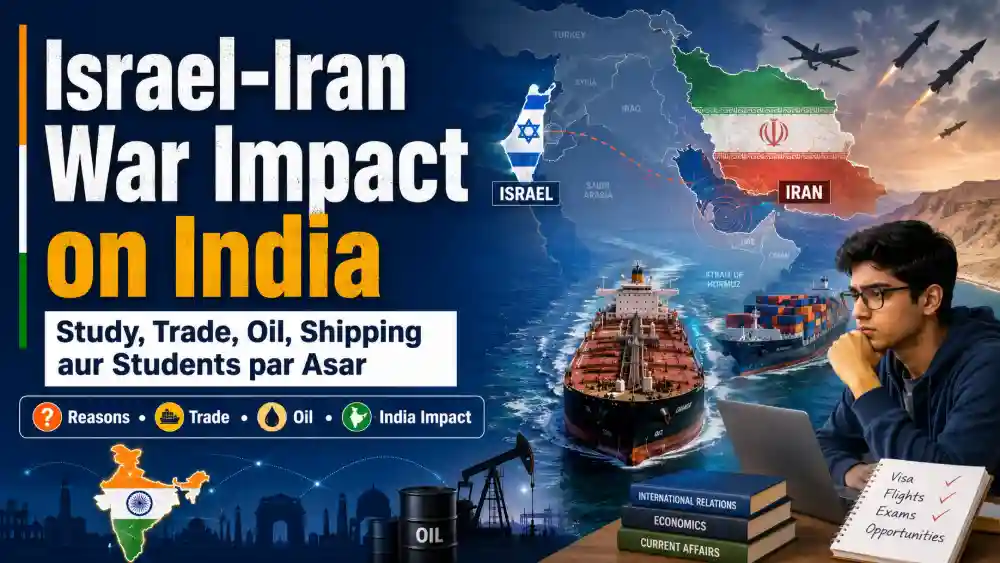
1. क्यों यह topic Indian students के लिए important है?
कई students सोचते हैं कि Israel-Iran war जैसे मुद्दे केवल international relations पढ़ने वालों के लिए हैं. लेकिन reality यह है कि Middle East में tension बढ़ने पर India में fuel prices, inflation, shipping cost, air tickets, study abroad safety, exports, jobs और current affairs questions तक असर दिख सकता है. यही वजह है कि government exam aspirants, commerce students, economics students और विदेश में पढ़ने की planning करने वाले students को इस issue को basics से समझना चाहिए.
India West Asia से deeply जुड़ा हुआ है. Gulf region में millions of Indians काम करते हैं, India oil और gas imports पर depend करता है, Indian exports Middle East और Europe तक समुद्री routes से जाते हैं, और students Israel, Iran, Gulf, Europe और America तक पढ़ाई के लिए travel करते हैं. अगर regional war shipping lanes, airspace या oil market को disturb करता है, तो उसका indirect impact Indian households और students पर भी आता है.
2. Quick Summary: इस conflict का India पर असर कहां दिखता है?
- Study: foreign universities, Indian students, visas, flights और safety advisories पर असर.
- Trade: exports/imports, delivery delay, freight cost और insurance cost बढ़ सकती है.
- Oil: Strait of Hormuz risk से crude oil और LNG supply पर pressure.
- Inflation: fuel और transport cost बढ़ने पर daily goods महंगे हो सकते हैं.
- Jobs: Gulf workers, shipping crew, export sectors और logistics jobs पर uncertainty.
- Exams: UPSC, SSC, State PCS, Banking और defence exams में current affairs angle important.
3. Israel-Iran conflict की basic background
Iran और Israel के बीच rivalry नई नहीं है. 1979 की Iranian Revolution के बाद Iran ने Israel के साथ relations तोड़ दिए और दोनों देशों के बीच ideological, security और regional influence conflict लगातार बढ़ता गया. Iran खुद को West Asia में एक major power के रूप में देखता है, जबकि Israel Iran के nuclear programme, ballistic missile capability और Iran-backed groups को security threat मानता है.
यह conflict कई decades तक mostly proxy war के रूप में चला. Proxy war का मतलब होता है कि दो बड़े rivals सीधे full-scale war लड़ने के बजाय regional allies, militias, intelligence operations, cyber attacks और limited strikes के जरिए एक-दूसरे पर pressure बनाते हैं. Lebanon में Hezbollah, Gaza में Hamas, Syria और Iraq में Iran-backed groups, और Israel के regional security operations इस broader rivalry से जुड़े रहे हैं.
2024 के बाद direct clashes ज्यादा visible हुए. 2025 में भी Israel-Iran tension ने major escalation देखा. 2026 में conflict फिर व्यापक level पर आया, जिसमें military strikes, missiles, drones, cyber operations, shipping lane threats और Strait of Hormuz जैसे global trade chokepoint पर pressure शामिल रहा.
4. War reasons: लड़ाई के पीछे बड़े कारण क्या हैं?
Israel-Iran war को केवल एक single incident से समझना सही नहीं होगा. इसके पीछे कई layers हैं. पहला कारण है security threat perception. Israel का कहना है कि Iran का nuclear programme और missile capability उसके लिए existential threat है. Iran की तरफ से Israel की policies, regional actions और US-Israel alignment को threat माना जाता है.
दूसरा कारण है regional power competition. West Asia में Saudi Arabia, Iran, Israel, Turkey, Qatar, UAE और United States जैसे actors influence के लिए अलग-अलग alliances और strategies अपनाते हैं. Iran अपनी regional network के through influence बढ़ाता है, जबकि Israel Iran-backed groups को अपने border और security के लिए खतरा मानता है.
तीसरा कारण है nuclear question. Iran हमेशा कहता रहा है कि उसका nuclear programme peaceful purpose के लिए है, जबकि Israel और Western countries को suspicion रहा है कि यह programme military capability की ओर जा सकता है. Nuclear issue diplomacy, sanctions, intelligence operations और military threats का सबसे sensitive part है.
चौथा कारण है proxy conflict. जब Lebanon, Syria, Iraq, Yemen या Gaza में Iran-linked groups और Israel/US interests के बीच clashes होते हैं, तो regional escalation का risk बढ़ जाता है. कभी-कभी local incident भी larger Iran-Israel confrontation में बदल सकता है.
5. यह किस type का conflict है?
- Direct military conflict: missile, drone, airstrikes और defence systems का use.
- Proxy conflict: regional allied groups और militias के through pressure.
- Cyber warfare: communication, infrastructure, apps और information systems पर attacks.
- Economic warfare: sanctions, oil routes, shipping disruption और insurance cost.
- Information war: social media narratives, propaganda, misinformation और public opinion battles.
- Maritime pressure: Strait of Hormuz, tanker movement, cargo routes और naval security.
6. Strait of Hormuz: India के लिए सबसे बड़ा economic risk
Strait of Hormuz Persian Gulf और Gulf of Oman के बीच एक narrow sea route है. यह दुनिया के सबसे important energy chokepoints में से एक है. Gulf countries से crude oil और LNG shipments इसी route से निकलती हैं. इसलिए यहां tension बढ़ने पर oil prices, shipping cost, insurance premium और energy security पर immediate impact आता है.
Recent reports के अनुसार conflict और ceasefire के बाद भी Strait of Hormuz में traffic पूरी तरह normal नहीं हुआ. Reuters ने report किया कि ceasefire के बाद crude shipments बढ़ीं, लेकिन traffic अभी भी pre-conflict normal level से नीचे था और vessels mine threat या security risk के कारण alternate safer routes से pass कर रही थीं. Another Reuters report ने tanker strike और cargo ship attack के बाद security warnings बढ़ने की बात बताई.
India के लिए यह इसलिए critical है क्योंकि India crude oil import-dependent country है. अगर oil supply route risky होता है, तो shipping insurance बढ़ता है, tanker movement slow होता है, refiners को sourcing strategy बदलनी पड़ती है और import bill पर pressure आता है. Import bill बढ़े तो rupee, fuel prices, inflation और government fiscal calculations पर असर पड़ सकता है.
7. Oil prices और Indian household budget
Oil price केवल petrol pump तक limited नहीं रहता. Diesel महंगा होता है तो transport cost बढ़ती है. Transport महंगा होता है तो vegetables, grains, milk, packaged goods, courier, bus fare और coaching/travel cost तक impact पहुंच सकता है. Students के लिए इसका मतलब है कि घर का monthly budget tight हो सकता है, travelling cost बढ़ सकती है और hostel/PG charges indirect रूप से प्रभावित हो सकते हैं.
Recent reports mixed signal देती हैं. कुछ reports में oil prices conflict peak के बाद pre-war या lower levels पर लौटने की बात आई, क्योंकि tanker movement improved हुआ और truce की उम्मीद बनी. लेकिन shipping executives और analysts अभी भी caution दिखा रहे हैं क्योंकि mines, tanker attacks और fragile ceasefire की वजह से full recovery uncertain है.
India ने oil supply manage करने के लिए crude sourcing diversify करने और strategic reserves पर ध्यान देने जैसे steps लिए. Times of India की report के अनुसार India ने Middle East conflict और Hormuz disruption risk के बीच Russian crude purchases और stocking strategy का use किया. यह दिखाता है कि geopolitical conflict के time energy diplomacy और sourcing flexibility बहुत important होती है.
8. Trade impact: Indian exports और imports पर असर
War trade को कई तरीकों से disturb करता है. सबसे direct तरीका है shipping delay. अगर ships risky route avoid करती हैं, तो longer route लेना पड़ता है. Longer route का मतलब है more fuel, more time, more insurance और more freight cost. दूसरा impact airspace closure या flight rerouting से आता है. Cargo flights और passenger flights को safe airspace use करना पड़ता है, जिससे route लंबा हो सकता है.
Economic Times ने conflict के कारण India की economy और exports पर impact का analysis किया था. Report में oil, rice, textiles, fertilizers, gems and jewellery, electronics और IT services जैसे sectors पर possible pressure बताया गया था. Supply chain delay, freight cost, insurance और regional demand uncertainty exporters को प्रभावित कर सकती है.
Reuters ने Cummins India के संदर्भ में report किया कि Middle East conflict ने production, logistics और commodity costs बढ़ाए और export demand को weaker बनाया. यह example दिखाता है कि conflict का असर केवल oil companies पर नहीं, बल्कि manufacturing और engineering exporters तक पहुंच सकता है.
9. कौन-कौन से Indian sectors प्रभावित हो सकते हैं?
- Oil and gas: crude sourcing, LNG supply, tanker security और import bill.
- Fertilizers: gas-linked cost और Middle East supply dependency.
- Rice and food exports: freight delay और destination market uncertainty.
- Textiles: export delivery schedule, shipping cost और buyer confidence.
- Gems and jewellery: bullion, freight, insurance और luxury demand.
- Electronics: components, logistics routes और air cargo costs.
- Shipping and ports: maritime insurance, crew safety और vessel rerouting.
- Aviation: airspace closure, fuel cost और route changes.
10. Study abroad: Students पर direct impact
Israel, Iran और wider Middle East में Indian students की presence limited हो सकती है compared to US/Canada/Europe, लेकिन conflict का impact much wider होता है. अगर region में airspace बंद होता है, flights cancel होती हैं, embassy advisories जारी होती हैं या universities online mode shift करती हैं, तो students की academic calendar planning disturb होती है.
2025 में Israel-Iran escalation के दौरान India ने Operation Sindhu के तहत Indian nationals को Iran और Israel से evacuate किया था. उस समय Indian students evacuation news में बहुत prominent रहे. यह example students को बताता है कि foreign study plan बनाते समय केवल university ranking और fees नहीं, बल्कि geopolitical safety, embassy registration, emergency funds और travel route भी देखना जरूरी है.
War zone में पढ़ने वाले students को सबसे बड़ा stress safety का होता है. Sirens, shelter alerts, internet disruption, university closures, visa uncertainty, flight cancellation और family anxiety पढ़ाई को सीधे disturb करते हैं. Even अगर student war zone में नहीं है, लेकिन Europe/Gulf route से travel कर रहा है, तो flights reroute होने से tickets महंगे और travel time लंबा हो सकता है.
11. Indian students in India: पढ़ाई क्यों disturb होती है?
India में बैठे students पर भी conflict का असर indirect रूप से आता है. पहला, family financial stress. अगर fuel prices और inflation बढ़ते हैं, तो coaching fee, hostel fee, travel cost और study material budget पर pressure आता है. दूसरा, mental distraction. War news, social media videos, fear-based content और polarized debates students का focus तोड़ सकते हैं.
तीसरा impact current affairs pressure है. Competitive exam aspirants को हर international conflict का exam angle समझना पड़ता है. UPSC, State PCS, SSC CGL, Banking, Defence और teaching exams में direct या indirect questions आ सकते हैं: Strait of Hormuz, oil supply, India-West Asia relations, evacuation operations, cyber warfare, international organizations और geopolitics.
इसलिए best approach है कि students breaking news में उलझने के बजाय structured notes बनाएं: cause, timeline, stakeholders, India impact, economy impact, exam keywords और possible questions. यही GovJobUpdates Student Hub का purpose है.
12. Students के लिए practical safety और study checklist
- Foreign study plans में embassy advisory और university safety updates जरूर check करें.
- Travel insurance, emergency contact और local Indian embassy details save रखें.
- War news को endless scroll न करें; daily 20 minutes structured current affairs enough है.
- Oil, trade, shipping और India impact के exam notes बनाएं.
- Family budget tight हो तो low-cost online preparation resources use करें.
- Social media misinformation से बचें; Reuters, official MEA, embassy और reliable sources देखें.
13. Indian workers और remittances का angle
Middle East में Indian workers की बड़ी presence है. Gulf countries से remittances Indian families के लिए major income source हैं. अगर regional tension jobs, construction projects, shipping, aviation या local economy को disturb करती है, तो Indian families तक impact पहुंच सकता है. Students whose parents work in Gulf may face anxiety and financial uncertainty.
War के दौरान governments generally evacuation, embassy helpline, advisory और coordination systems activate करते हैं. Indian government का past experience, जैसे Operation Sindhu, दिखाता है कि conflict zones में Indian nationals की safety national priority बन जाती है. लेकिन individual level पर भी registration, documents, passport validity और emergency planning important है.
14. Cyber warfare और internet disruption: पढ़ाई पर नया risk
Modern war केवल missiles और tanks से नहीं लड़ी जाती. Cyber attacks, misinformation, internet shutdown और digital infrastructure attacks भी war का हिस्सा बन चुके हैं. Iran में internet shutdowns और network disruptions पर academic studies भी सामने आईं, जिनमें large-scale connectivity restrictions और centralized controls का analysis किया गया.
Students के लिए इसका मतलब है कि online classes, digital libraries, international collaboration, research communication और exam portals भी geopolitical tension से affected हो सकते हैं. किसी भी country में internet shutdown या cyberattack education continuity को break कर सकता है. इसलिए universities और students को offline backup, downloaded study materials, alternate communication और emergency academic policies की जरूरत होती है.
15. India की diplomatic balancing challenge
India के relations Israel और Iran दोनों के साथ important हैं. Israel defence technology, agriculture, innovation और security cooperation में important partner है. Iran historically energy, connectivity, Chabahar port और Central Asia access के लिए important रहा है. Gulf countries India के energy supply, remittances और diaspora के लिए critical हैं. इसलिए India को एक balanced diplomatic approach रखनी पड़ती है.
India generally de-escalation, dialogue, safety of nationals और regional stability पर focus करता है. War में किसी one-sided loud position से energy security, diaspora safety और strategic interests प्रभावित हो सकते हैं. Government exam aspirants को यह समझना चाहिए कि foreign policy अक्सर moral statement और national interest दोनों का balance होती है.
16. Exam-ready keywords
- Strait of Hormuz
- West Asia / Middle East geopolitics
- Energy security
- Oil import dependency
- Maritime chokepoint
- Proxy war
- Cyber warfare
- Evacuation operation
- Shipping insurance
- Inflation and current account deficit
17. India पर economic impact को simple formula में समझें
Middle East tension बढ़ता है → shipping route risky होता है → freight and insurance cost बढ़ती है → oil and imports महंगे हो सकते हैं → India का import bill बढ़ सकता है → rupee और inflation पर pressure बन सकता है → household budget और business cost बढ़ सकते हैं.
दूसरी तरफ अगर ceasefire stable रहे, tanker traffic improve हो और oil prices fall करें, तो pressure कम हो सकता है. इसलिए impact fixed नहीं है; यह conflict intensity, shipping safety, oil supply, global demand और diplomatic developments पर depend करता है.
18. क्या India को तुरंत बड़ा नुकसान होगा?
Immediate impact हमेशा full-scale crisis में convert नहीं होता. India के पास diversified crude sourcing, strategic reserves, diplomatic channels और shipping coordination जैसे tools हैं. Recent Reuters report के अनुसार Indian-flagged oil tankers Strait of Hormuz clear कर चुके थे और Shipping Ministry agencies safety coordination पर काम कर रही थीं. यह दिखाता है कि India risk management कर रहा है.
लेकिन risk ignore करने लायक नहीं है. अगर conflict फिर escalate हुआ, Hormuz movement slow हुआ, tanker attacks बढ़े या mines threat लंबा चला, तो oil, shipping और trade pressure फिर बढ़ सकता है. इसलिए students को इस topic को static fact की तरह नहीं, dynamic current affairs issue की तरह पढ़ना चाहिए.
19. Competitive exam answer में कैसे लिखें?
Intro: Israel-Iran conflict West Asia का major security crisis है, जिसका impact India की energy security, trade, diaspora और students तक पहुंच सकता है.
Body points: reasons, nuclear issue, proxy war, Strait of Hormuz, oil imports, shipping cost, inflation, exports, study abroad safety, evacuation operations.
Conclusion: India को balanced diplomacy, energy diversification, shipping security, diaspora safety और resilient supply chains पर focus करना चाहिए.
20. Final Analysis: War दूर है, impact पास है
Israel-Iran war और Middle East tension हमें यह सिखाते हैं कि आज की दुनिया interconnected है. Tehran, Tel Aviv, Hormuz या Bahrain में होने वाली घटना Delhi, Mumbai, Surat, Kochi, Lucknow और छोटे शहरों के students तक indirectly पहुंच सकती है. Oil price, air tickets, exports, family income, study abroad safety और current affairs preparation सब global events से linked हैं.
Students को इस topic को emotional debate की तरह नहीं, analytical current affairs topic की तरह पढ़ना चाहिए. War के reasons समझें, conflict type समझें, India के interests समझें, और फिर trade, study, economy और security के impact को connect करें. यही mature preparation है.
GovJobUpdates की सलाह है कि aspirants रोज breaking news में उलझने की जगह structured notes बनाएं. ऐसे topics exam में direct question, essay point, interview discussion या group discussion topic बन सकते हैं. इसलिए Israel-Iran war का India पर impact केवल international news नहीं, बल्कि exam और real life दोनों के लिए important है.
अक्सर पूछे जाने वाले प्रश्न (FAQs)
Israel-Iran war India ko kaise affect karta hai?
यह India को oil prices, shipping routes, exports, inflation, rupee pressure, study abroad safety, flights और Indian workers/students की security के through affect कर सकता है.
Students ke liye sabse bada impact kya hai?
Study abroad safety, visa delays, flight cancellation, online classes, mental stress, family finances और current affairs preparation सबसे बड़े student impact हैं.
Strait of Hormuz kyu important hai?
यह global energy shipping का critical chokepoint है. इस route में disruption crude oil, LNG, freight cost और insurance को प्रभावित कर सकता है.
Kya Indian exports affected ho sakte hain?
हाँ. Shipping delays, higher insurance, freight cost और Middle East demand uncertainty exports को affect कर सकती है.
Students ko is topic ko kaise prepare karna chahiye?
Causes, timeline, stakeholders, India impact, economy impact, Strait of Hormuz, evacuation operations और exam-ready keywords के short notes बनाएं.
Sources checked
- Reuters: Tanker struck in Hormuz as tensions rise
- Reuters: Crude shipments through Hormuz after ceasefire
- Reuters: Indian-flagged tankers clear Strait of Hormuz
- Reuters: Middle East conflict clouds Indian exports
- Times of India: How India is managing oil supply amid Hormuz risk
- Economic Times: Cost India may pay for Iran-Israel war
- The Guardian: Oil price and Strait of Hormuz traffic
- arXiv: Iran internet shutdown study
Disclaimer
यह article educational awareness और current affairs understanding के लिए है. Conflict की स्थिति तेजी से बदल सकती है. Students, travellers और workers को final decision official government advisories, embassy updates, airline notices और reliable news sources के आधार पर लेना चाहिए.
Discussion 0
Join the Discussion
Login to your account to share comments, tips, and engage with other aspirants.